Add Row
Add Element
cropper
update

{COMPANY_NAME}

cropper
update
Add Element
update

CALL US

+1 (415) 993-3922

Add Element
update

EMAIL US

robert@sfpressmedia.com

Add Element
update

WORKING HOURS

Mon-Fri: 9am-6pm

Add Element

Add Element
  • About Us
  • Contact Us
  • Advertise
  • Industry Feature
Add Element
  • update
  • update
  • update
  • update
  • update
  • update
  • update
April 19.2025
3 Minutes Read

Exploring the Holy Fire Ceremony: A Miraculous Tradition in Jerusalem

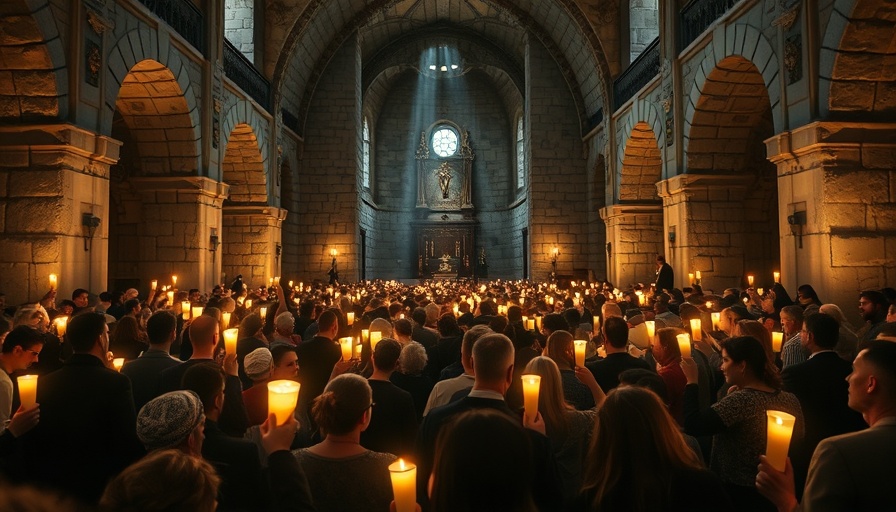
Holy Fire ceremony in Jerusalem with crowd holding candles.

Understanding the Holy Fire Ceremony: A Glimpse into Tradition

Every year, on the Saturday preceding Easter, thousands of Christians congregate at the Church of the Holy Sepulcher in Jerusalem for a spectacular event known as the Holy Fire ceremony. This tradition, which spans over 1,200 years, not only represents a crucial aspect of Christian worship but also serves as a profound expression of faith and hope. During this ceremony, worshipers enter the dimly lit basilica with unlit candles, providing a striking representation of the transition from darkness to light, symbolic of the resurrection of Jesus Christ.

The Luminescent Miracle: A Symbol of Faith

The centerpiece of this ceremony is the lighting of the flames by the Greek Orthodox Patriarch from a spot believed to be Jesus’ tomb, located within the Holy Edicule. As he emerges with two lit candles, the light from the flames is shared among the gathered faithful, transforming the darkness into a luminous spectacle. This moment, imbued with deep spiritual significance, is believed by many to be a miraculous occurrence. Eastern Orthodox Christians hold that the flame appears spontaneously, representing divine intervention and the resurrection of Christ. Yet, skeptics have been quick to question this belief throughout history, likening it to mere theatrical trickery aimed at captivating audiences.

The Historical Context: A Tradition with a Troubling Past

To fully appreciate the Holy Fire ceremony, one must understand its historical backdrop. Its inception dates back over a millennium during a time when Jerusalem was a religious epicenter, attracting countless pilgrims. However, this event hasn’t been without its perils. The ceremony was marred by tragedy in 1834, when a chaotic stampede resulted in the tragic deaths of about 400 pilgrims, highlighting the critical safety concerns that have plagued the event through the years. This episode serves as a poignant reminder of the potential dangers associated with large gatherings in such a sacred yet constrained space.

Modern Day Concerns: Safety and Accessibility

In recent years, the Israeli authorities have taken measures to regulate the number of participants in the Holy Fire ceremony. Citing safety concerns and the historical risks associated with overcrowding, they have instituted limitations on the number of attendees. This decision has provoked criticism from church leaders who argue that it disrupts the tradition's integrity and the communal aspect of the event, fostering tension between the government and religious institutions.

Cultural Significance: More Than Just a Ceremony

The Holy Fire ceremony is not merely a religious ritual; it embodies deep cultural significance that transcends boundaries. For many Orthodox Christians, it provides a unique opportunity to experience a profound connection to their faith and heritage. It serves as a moment of unity among the diverse Christian communities, reinforcing the shared beliefs that bind them. Observing the ceremony allows visitors to participate in a living tradition that has survived through time and tumult.

What Lies Ahead: Future Predictions on the Tradition's Evolution

As we look ahead, the future of the Holy Fire ceremony is at a crossroads. With advances in safety and crowd management technologies, there is potential for the ritual to evolve in response to modern challenges. However, it remains crucial that these changes do not diminish the spiritual and communal essence that the ceremony represents. Engaging younger generations in this tradition could help ensure its continued survival. As attitudes towards public gatherings evolve, how religious events adapt will significantly shape their attendance and significance in the years to come.

Conclusion: Embracing the Light of Tradition

The Holy Fire ceremony in Jerusalem stands as a testament to the enduring power of faith and tradition. While modern challenges present themselves, the central message of hope and renewal continues to shine brightly. Whether observed from afar or experienced firsthand, this ceremony offers valuable insights into the cultural and spiritual fabric of not only Jerusalem but also the global Christian community. The luminous flame serves as a potent reminder of the light that can emerge from darkness, encouraging all who witness it to embrace both their traditions and their shared humanity.

Events

Write A Comment

*
*
Related Posts All Posts

Sydney's Bondi Beach Terror Attack: The Startling Reality of Rising Antisemitism

Update Shooting at Bondi Beach: An Unthinkable Act of Violence On December 14, 2025, Sydney witnessed a horrific event as two gunmen opened fire during a Jewish holiday celebration at Bondi Beach, killing at least 12 people and injuring dozens more. This tragic incident has been declared a terrorist attack by Australian authorities, underlining the severe threat posed by rising antisemitism in the region. A Targeted Assault: Impacts on the Jewish Community The attack occurred amidst hundreds of attendees celebrating Hanukkah—a time meant for joy and family gatherings. Instead, it led to panic and chaos as sound of gunfire echoed across the beach. Prime Minister Anthony Albanese condemned the act, describing it as "an act of evil, antisemitism, terrorism that has struck the heart of our nation." This shooting not only targeted individuals during a moment of festive celebration but also symbolically attacked the Jewish community in Australia, provoking fear and unease among Jewish Australians. The Context of Rising Antisemitism in Australia In the months preceding the shooting, Australia has experienced a disturbing rise in antisemitic incidents, spurred by the ongoing Israel-Hamas conflict. Reports indicate an increase of nearly five times the average number of antisemitic events since October 2023, spurring community leaders to declare the situation a pressing national concern. Anti-Jewish incidents in the country have surged, with statistics showing that there were approximately 1,654 reported incidents within a year, a figure unprecedented in recent history. A Nation's Reflection on Safety and Security The Bondi Beach attack raises hard questions about safety for minority communities in Australia. Many Jewish citizens express feelings of vulnerability in what should be a welcoming environment. Jewish parents are increasingly apprehensive about sending their children to schools or community gatherings. The Australian government has pledged to bolster security measures, addressing these fears head-on. From enhancing police presence to establishing new security protocols at Jewish institutions, there is a clear urgency to restore a sense of safety within the community. Heroic Actions Amidst the Chaos In the face of chaos, acts of bravery emerged that resonated deeply within the community. Bystanders, one seen tackling a gunman, displayed remarkable courage, possibly saving lives in the process. Such responses, while heroic, highlight the desperate need for improved safety measures and community vigilance. Closing Thoughts: A Call to Unity Against Hatred The Bondi Beach shooting serves not only as a painful reminder of the violence that antisemitism can incite but also as a call to action for all Australians to stand united against hatred. Leaders across the nation, from various backgrounds, echoed this sentiment, emphasizing that any attack on one community is an attack on all. As Australians reflect on this tragedy, it is an opportunity to mend societal divisions and work towards a future where violence against any group is wholly unacceptable.

Explore Winchester's Legacy and Seasonal Delights in San Francisco

Update Unearthing the Hidden Stories of San Francisco In this week's exploration of Bay Area culture, we delve into the intriguing tales behind the Winchester Mystery House, discover the vibrant flavors of holiday latkes, and appreciate the profound role of native plants within the Presidio. Each piece of this narrative paints a rich tapestry of the San Francisco community. Reviving Urban Trails Through Community Action This past weekend, dedicated volunteers gathered at the Presidio's Sunset Scrub, planting over 2,000 native plants to restore vital habitats in a collaborative effort spearheaded by the Presidio Trust. Such initiatives are crucial for not only revitalizing local ecology, but also promoting community involvement. Encouraging hiking via public transit, as showcased by content creator BIKED.Curious on the De La Veaga Trail, highlights how accessible nature can unite residents in the face of looming transit budget cuts. Sarah Winchester: Beyond the Myths Long shrouded in ghost stories, the Winchester Mystery House provides a rare glimpse into San Jose's architectural past. Initially constructed under Sarah Winchester's vision, the house is a testament to the unique Queen Anne Victorian style and showcases craftsmanship from the late 19th century, blending history with design. It's crucial to separate fact from fiction—much of the lore surrounding Winchester stems from urban legends rather than her own narrative. Seasonal Tastes: Exploring Ube and Latkes As we embrace the holiday spirit, local culinary innovations take center stage. Craig Stoll's take on latkes at Delfina presents a lighter, gluten-free twist on this traditional dish, perfect for festive gatherings. Meanwhile, baker Henry Awayan's focus on ube, the Filipino purple yam, not only draws from his heritage but also enriches the Bay Area's culinary scene, merging tradition with contemporary baking delights. Awayan plans to guide classes from his new book, destined to keep the ube trend thriving. Supporting Emerging Artists As the Bay Area nurtures talent, Sausalito’s Sydney Li-Jenkins emerges as a bright star, recently securing a win at the 2026 YoungArts Competition. Her achievements reflect not just her individual brilliance but a community's commitment to fostering creativity. Likewise, students from Miramonte High School are gaining valuable job experience by running a dog treat business, melding education and entrepreneurship in an innovative way. Building a Sustainable Future Winchester’s influence on sustainability in her time, notably her efforts to conserve redwoods and promote ecological health through her agricultural practices, underscores a long-standing commitment to the environment in California. Her initiatives pioneered modern conservation efforts and provide inspiration for current sustainability movements, including those undertaken today at the Presidio. Connecting our history of eco-consciousness to contemporary practices can help us navigate future challenges. As we enjoy community events and culinary creations, let's remember the stories that shape us. Engaging with local history and contributing actively to our environment fosters pride in the Bay Area. Explore your surroundings and partake in activities that honor this culture.

Confronting Hate: Recent Incidents Signal Urgent Need for Community Action

Update The Rise of Hate and the Fight for Community Recent events in Northern California have illuminated a pervasive and unsettling trend: a surge in hate incidents targeting marginalized communities. In Petaluma, a well-known youth mentor and former Harlem Globetrotter, William "Bull" Bullard, had his SUV defaced with swastikas and racial slurs while parked near his home. This incident is symptomatic of a broader cultural issue where hate becomes normalized, often fueled by inadequate responses from local authorities. Bullard's assertion that enough is enough resonates profoundly—demonstrating the urgent need for action against such insidious expressions of racism. A Disturbing Display at Branham High School In a similarly shocking episode, students at Branham High School in San Jose formed a human swastika on the school's football field, sharing the image across social media with a quote from Adolf Hitler. This incident has sparked outrage and concern within the community, highlighting how some young people might feel emboldened to express hate without fear of repercussions. The school district has recognized the incident as hate violence and is taking steps to address it with educational initiatives aimed at fostering understanding and compassion. Legislative Action Against Hate Amid these troubling incidents, California’s government is taking action to combat hate and discrimination. Recently, Governor Gavin Newsom signed significant legislation aimed at combating antisemitism and promoting inclusivity in schools. These new laws, AB 715 and SB 48, are designed to create accountability and improve responses to hate incidents, signaling a crucial step toward ensuring schools are safe havens for all students. The collaborative efforts among lawmakers, educators, and community leaders showcase a collective commitment to eradicating hate in all its forms. Community Response and Emotional Resonance The response to both incidents has been illuminating. Many residents, including more than 200 students from Branham High School, organized a walkout in solidarity with the Jewish community. Such actions highlight the importance of community solidarity against hate and intolerance. Bullard's hope for his gym, Bam Bam Training, symbolizes a proactive approach: creating safe spaces for youth to engage in positive activities and conversations. Moving Toward a Solution Addressing these issues requires more than just legislative action; it calls for a cultural shift. Schools, families, and communities need to come together to foster environments that prioritize kindness and understanding. For instance, providing youths with mentors, safe spaces, and educational programs can counteract the influences of hate. As the San Jose Community Jewish Relations Council's Tyler Gregory noted, this isn’t merely a one-off incident. Continued vigilance and education will be essential in dismantling the milieux that allow these hateful ideologies to flourish.

Terms of Service

Privacy Policy

Core Modal Title

Sorry, no results found

You Might Find These Articles Interesting

T
Please Check Your Email
We Will Be Following Up Shortly
*
*
*