Add Row
Add Element
cropper
update

{COMPANY_NAME}

cropper
update
Add Element
update

CALL US

+1 (415) 993-3922

Add Element
update

EMAIL US

robert@sfpressmedia.com

Add Element
update

WORKING HOURS

Mon-Fri: 9am-6pm

Add Element

Add Element
  • About Us
  • Contact Us
  • Advertise
  • Industry Feature
Add Element
  • update
  • update
  • update
  • update
  • update
  • update
  • update
August 25.2025
3 Minutes Read

How the Ferry Building Plans to Own the Night in San Francisco

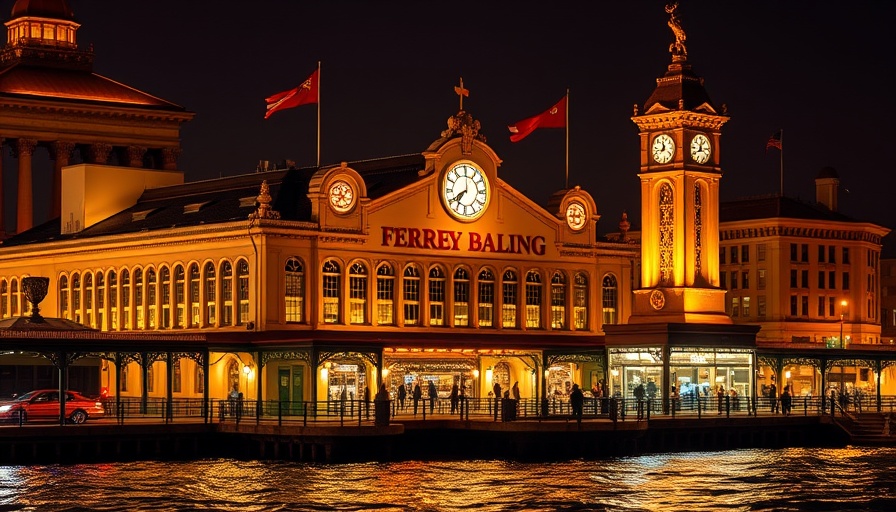
Ferry Building nightlife San Francisco with illuminated clock tower.

Reviving the Night: Ferry Building's Transformation

In the heart of San Francisco, the iconic Ferry Building is undergoing a remarkable transformation from a daytime destination to a bustling night-time hub. Once quiet and uninviting after dark, recent efforts have sparked a new nightlife dynamic that is beginning to reshape public perception. Now, a late-night ice cream shop isn’t the only reason to visit; it’s about revitalizing the entire experience after sunset.

Strategies to Engage After Dark

The Ferry Building has long been recognized for its vibrant daytime market, but the evenings have been a different story. With the pandemic forcing many businesses to reconsider their strategies, new leadership under Hudson Pacific Properties is pushing for change. “We want to reestablish the Ferry Building as not just a place for lunch, but as a full-service destination,” says Shawn McGarry, executive VP for Northern California. This determination has led to a variety of exciting programming designed to draw visitors in during the evening hours.

Community Activity and Cultural Offerings

New evening activities include workout sessions, game nights focused on mahjong, and art exhibitions, creating a diverse appeal for various community segments. As businesses extend their hours, patrons are beginning to flock to the soothing ambiance of the waterfront for both recreation and relaxation. This shift is exemplified by recent records showing increased foot traffic during the evenings, indicating a successful draw.

Mixed Results: Challenges Ahead

Despite these initiatives, challenges remain. A lack of uniformity in business hours creates fragmentation; with many shops still closing early, the Ferry Building's potential remains unrealized. For instance, while Humphry Slocombe extends its hours until 10 PM, others remain shuttered by 5 PM. This inconsistency can confuse potential visitors who expect a vibrant scene throughout the night.

Anticipating Future Growth

As more shops begin to experiment with later hours, the promise of expanded culinary offerings shines bright. New entrants like Lucania and Arquet will enhance dining options, ensuring that visitors can enjoy a meal any time of the day. Additionally, Red Bay Coffee plans to roll out an innovative cocktail menu targeting evening crowds, reflecting an evolving dining culture at the Ferry Building.

A Beacon for Local Culture

The Ferry Building doesn't just want to stay relevant; it aims to be a beacon of local culture and community engagement. This transformation aligns with broader trends in urban planning, where cities worldwide seek to breathe life into public spaces post-sunset. By embracing its role as a cultural hub, the Ferry Building is positioning itself not only as a destination for tourists but also as a center for local communities to gather and enjoy.

What This Means for The Bay Area

This shift at the Ferry Building is emblematic of a larger trend in revitalizing urban spaces. Across the Bay Area, cities are implementing similar measures to enhance night-time economies. The focus on entertainment and social engagement is essential for recovery in post-pandemic contexts. The revitalized Ferry Building serves as a case study for how traditional marketplaces can adapt and thrive.

The resurgence of night-time activities at the Ferry Building illustrates the potential for community-driven changes, emphasizing that revitalizing public spaces can unite neighborhoods and create unforgettable experiences.

Conclusion: The Call for Night Owls

As the Ferry Building works to own the night, it’s a perfect time for locals and tourists alike to explore after dark—discovering unique dining options, community events, and vibrant atmosphere. Visit San Francisco’s iconic waterfront destination, where each evening brings a fresh experience. Embrace the transformation and become part of the night-time revival!

San Francisco Spotlight

0 Comments

Write A Comment

*
*
Related Posts All Posts

How JLL's New Director Scott Greenwood Will Shape East Bay Real Estate

Update JLL Welcomes New Leadership: A Turn Towards Growth In a significant move within the commercial real estate sector, JLL has appointed Scott Greenwood as the new Managing Director to oversee leasing activities specifically in the dynamic and evolving East Bay market. Greenwood, who previously held key positions at CBRE, brings with him over 20 years of experience in real estate leasing and management. Why Scott Greenwood's Appointment Matters This strategic hiring comes at a pivotal time for the East Bay, particularly as the region experiences a swift transformation. With the ongoing shifts in remote work dynamics and the increasing demand for real estate that combines both work and lifestyle elements, Greenwood's expertise is expected to guide JLL effectively through this new landscape. As noted in various sources, including the San Francisco Business Times, Greenwood is focused on leveraging JLL’s resources to cultivate strong relationships within the community and attract new clients. His vision includes redefining how spaces are utilized, ensuring they cater to shifting tenant needs. The Competitive East Bay Market The East Bay has been gaining attention as a hub for tech professionals and a growing demographic eager for space that reflects their lifestyles. The demand for flexible work environments is significant, and JLL is positioned to capitalize on this trend under Greenwood's leadership. In fact, many experts believe he will play a crucial role in shaping how spaces are integrated into modern life. Local Insights: The Future of East Bay Real Estate What does this mean for residents and businesses in the East Bay? With a focus on sustainable development and an eye towards innovative designs, Greenwood's leadership may usher in new opportunities for both existing and upcoming businesses in the area. The emphasis on community-oriented developments might very well reflect the desires of a population seeking more than just a workplace: they are looking for an environment that fosters creativity, collaboration, and inclusivity. A Key Moment for JLL and the East Bay Formerly competitive with San Francisco and Silicon Valley, the East Bay is staking its claim as a prime destination for professionals. Industry analysts are optimistic about how Greenwood will steer JLL to embrace this transformation. With current market trends favoring mixed-use developments and a renewed interest in urban spaces, the potential for growth is substantial. Community Reactions and Future Prospects As the real estate landscape shifts, community leaders and stakeholders are eager to see how Greenwood will affect local leasing operations. His history of managing large-scale properties with varied tenants places him in a prime position to understand the intricate balance between commercial needs and community enhancement. This transition is viewed not just as a hiring, but as a revitalization of a region’s real estate potentials, something that could directly benefit local families and business owners alike. Encouragingly, Greenwood has stated that his focus will also address community concerns, aiming for projects that are environmentally responsible and socially connected. Conclusion: Embracing Change in the East Bay As we look ahead, the appointment of Scott Greenwood signals a transformational moment not just for JLL, but for the East Bay as a whole. With his guidance, the firm aims to enhance community engagement and economic resilience through innovative leasing strategies. For residents and business owners, this change heralds new opportunities for development that align with the evolving demands of modern society. In a continually changing market landscape, now might be the time for interested individuals and local business owners to engage with these developments—be it through direct involvement, investment opportunities, or simply staying abreast of how these changes may influence their local community.

San Francisco Housing Dilemma and Zuckerberg's Testimony: What It Means for Families

Update A Turning Point for San Francisco Housing San Francisco has seen a turbulent week in housing news, with Related California dropping its plans for a significant housing project on Lake Street, a decision that has caught the attention of many in the Bay Area. This stall underscores the complicated relationship developers have with the city’s regulations and community needs, reflecting broader trends seen in urban development across the United States. Meta's Zuckerberg Faces Tough Questions Meanwhile, Mark Zuckerberg, CEO of Meta, is under the spotlight at a trial in Los Angeles concerning claims that social media platforms disproportionately harm children. In his testimony, Zuckerberg defended Instagram’s age restrictions, asserting that the platform does not allow users under 13 years old. Yet, internal documents show a more complicated reality, suggesting a significant number of users may be underage, raising valid concerns among parents and lawmakers alike. Connections to Local Communities These unfolding events are more than just business as usual; they have deep social implications. For parents and guardians in San Francisco and beyond, the ongoing discussions about housing and social media resonate significantly. With housing becoming increasingly unaffordable and the influence of social media on mental health growing more pronounced, community members are left questioning how these dynamics will ultimately shape their neighborhoods and families. Public Sentiment and Social Responsibility Public perception of social media companies, particularly Meta, is increasingly negative. A recent Pew Research study found that many view Zuckerberg unfavorably, solidifying the call for ownership and accountability from tech giants. This growing scrutiny is paralleled in housing development, where residents are worried about gentrification and the lack of affordable options. Community engagement and transparency are crucial for both developers like Related California and tech leaders like Zuckerberg in restoring trust. What Lies Ahead for the Bay Area The potential impacts of these developments extend beyond just local headlines. As families in the Bay Area grapple with affordability and digital well-being, future models for housing and tech regulation may evolve. Homeowners, renters, and tech users alike need to remain vigilant as they advocate for sustainable solutions that prioritize people over profits. Taking Action in Your Community Parents and community members are encouraged to engage actively in local discussions surrounding housing projects and technological impacts on youth. Whether it's attending city hall meetings, supporting local housing initiatives, or advocating for safer social media practices, every voice contributes to shaping a more inclusive future. Both the housing landscape and the tech sphere are at critical junctures in San Francisco. Developers, tech entrepreneurs, and community members must collaborate to ensure that growth benefits everyone, especially those who are most vulnerable.

AI Productivity Gains Lag Despite Widespread Adoption: Insights for Businesses and Employees

Update Why AI Productivity Gains Are Underwhelming Artificial Intelligence (AI) is widely embraced across industries, with businesses sinking substantial investments into innovative technologies designed to streamline operations and boost productivity. Yet, despite this enthusiastic adoption, many companies are reporting that productivity gains are not living up to expectations. Why is there such a gap between investment and actual outcome? Recent studies highlight a troubling trend: while executives remain optimistic about the potential of AI, the reality is that short-term productivity increases have been disappointingly minimal for many. Understanding the Current Landscape of AI in Business Recent findings from a Morgan Stanley survey shed light on the current state of AI adoption globally, revealing that many companies have seen only marginal productivity increases—often falling below projections. Approximately 11.5% productivity gain across multiple sectors indicates growth, but not the booming momentum many anticipated. Factors contributing to this slowdown include inadequate training for employees to utilize new technologies effectively, coupled with a transformation challenge in organizational structures. As companies adopt AI, they often overlook the necessary evolutions in workforce adaptability and education. Tackling the Workforce Impact: AI's Double-Edged Sword Moreover, while AI adoption is meant to enhance efficiency, it has simultaneously triggered a net loss of jobs in some sectors—up to 4% globally. This reality clashes with optimistic projections that AI would spur job growth by creating roles focused on technology. The nuances across countries also complicate this picture: U.S. companies have reportedly achieved a net gain in employment, while European firms face significant cutbacks. These outcomes emphasize the need for a structured approach to retrain and redeploy workforce talent in tandem with AI advancements. Parallels Between Optimism and Reality Executives’ confidence in AI, especially in sectors such as healthcare and transportation, reveals a discrepancy between anticipated and actual performance. For instance, healthcare companies report productivity gains ranging from 1% to over 20%, yet many still grapple with personnel issues as they shift job roles due to AI integration. This parallel encourages a deeper investigation into strategic planning surrounding AI: proactive retraining and flexible career paths are essential in fostering sustained productivity improvement. What This Means for Executives and Workers Alike For corporations and organizational leaders across the USA, UK, Germany, and beyond, understanding AI's potential and limitations is crucial. Executives should focus on identifying sectors showing rapid growth potential due to AI, while also anticipating educational needs for existing staff. A recent survey indicated that 27% of employees received retraining in the last year, underscoring the importance of cultivating a skilled workforce equipped to leverage AI tools effectively. Additionally, recognizing that early-career employees are the most vulnerable positions can shape targeted strategies to retain talent in a rapidly evolving landscape. Future Predictions: Shocking Trends Ahead As we navigate through the transition brought about by AI technology, the forecast indicates ongoing challenges, including potential labor market disruptions. This poses a unique opportunity for companies to reassess their operational models in light of AI's capabilities. Investments in workforce education will not only lead to higher engagement rates but will be fundamental in successfully integrating AI solutions while maintaining a motivated and adaptive workforce. The anticipation of how AI will evolve over the coming years remains one of the industry's most exciting realms. Taking Action: A Path Forward The emergence of AI in the workplace brings clear lessons for both companies and individuals. Businesses must prioritize the strategic integration of AI by adopting comprehensive training programs while encouraging flexibility and support for employees’ transitions. At the same time, individuals aiming to navigate their career paths should seek opportunities for skill development that aligns with AI trends. Companies that integrate deliberate educational initiatives will be better positioned to reap the benefits of technological advances. Conclusion: The Need for Proactive Adaptation As AI continues to transform industries at an unparalleled pace, the importance of pursuing tangible productivity gains, while simultaneously addressing workforce dynamics, has never been more critical. Acknowledging the current landscape provides a foundation for proactive strategies that marry technology adoption with workforce training and development. Those ready to invest in both their technology and people will not only better navigate disruptions but also ultimately thrive in the evolving economic environment.

Terms of Service

Privacy Policy

Core Modal Title

Sorry, no results found

You Might Find These Articles Interesting

T
Please Check Your Email
We Will Be Following Up Shortly
*
*
*