Add Row
Add Element
cropper
update

{COMPANY_NAME}

cropper
update
Add Element
update

CALL US

+1 (415) 993-3922

Add Element
update

EMAIL US

robert@sfpressmedia.com

Add Element
update

WORKING HOURS

Mon-Fri: 9am-6pm

Add Element

Add Element
  • About Us
  • Contact Us
  • Advertise
  • Industry Feature
Add Element
  • update
  • update
  • update
  • update
  • update
  • update
  • update
June 09.2025
3 Minutes Read

Newsom Challenges Trump Over National Guard: What’s at Stake?

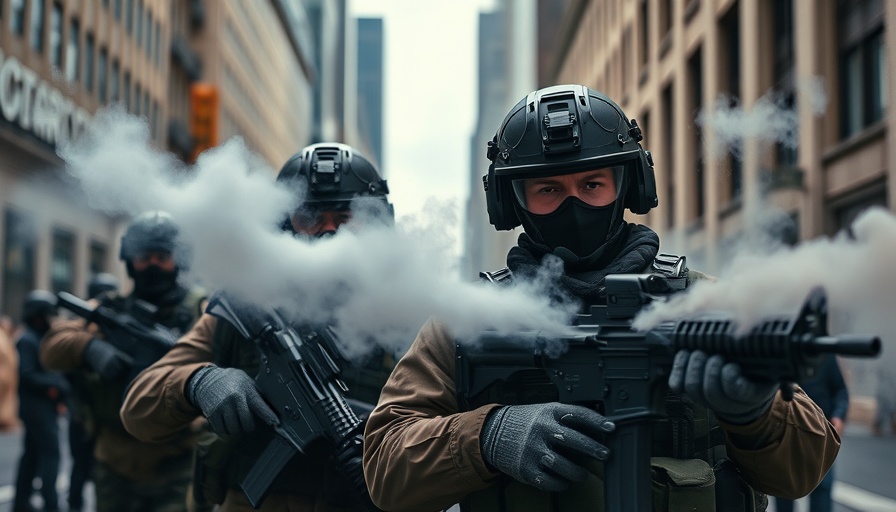
National Guard Deployment Los Angeles scene with military personnel using tear gas in urban setting.

Newsom’s Bold Stand: Demanding Control Over State Troops

In a significant political move symbolizing state versus federal authority, California Governor Gavin Newsom has formally requested President Trump to withdraw National Guard troops from Los Angeles. This standoff arose amid ongoing protests related to immigration policies, which have sparked intense debates regarding state sovereignty and the federal government's power to intervene in such matters.

The Context: A Deepening Conflict

As protests escalate across Los Angeles, marked by law enforcement confrontations and civil unrest, Newsom claims the deployment of the National Guard is a breach of California's sovereignty. "This is a serious breach of state sovereignty — inflaming tensions while pulling resources from where they’re actually needed," he asserted. Such statements are indicative of a growing rift between state and federal authorities, particularly on issues of public safety and civil rights.

Historical Perspective: When States Fight Back

This isn't the first time a governor has challenged a president's authority. Historical precedents exist where governors have resisted federal intervention, citing the Tenth Amendment, which reserves powers not delegated to the federal government to the states. In a similar vein, Newsom’s stance echoes previous civil rights movements when federal and state roles clashed, highlighting the delicate balance of power within the U.S. governance framework.

Public Sentiment: Emotions Running High

The deployment of National Guardsmen has intensified public emotions, particularly among advocates for immigrant rights. Many feel that raising the military's presence at protests represents an escalation of tensions that could necessitate violence. The fact that California's adjutant general, appointed by Newsom, oversees troop deployment further fuels the argument that Trump's intervention is unwarranted. The emotional stakes are high as citizens grapple with issues of safety, rights, and governance.

The Legal Framework: Understanding the Basis of Authority

President Trump’s decision to deploy the National Guard rests on a seldom-used interpretation of federal law under Title 10, which allows military forces' federal deployment amid perceived rebellion or civil unrest. Newsom argues that this interpretation is a misapplication of legal power, signaling a disturbing trend in federal overreach. Examining this legal aspect sheds light on the constitutional implications of choosing to militarize civil protests, something that has not been widely accepted as a standard practice.

What’s Next? Predictions and Potential Outcomes

As Governor Newsom’s request remains pending, the trajectory of this conflict will be enormously significant. Political analysts foresee potential ramifications that could affect not just California but states across the nation. The outcome may set a precedent for how governors respond to crises without federal intervention and, conversely, how the federal government perceives its responsibilities in civil unrest situations. Will other governors join Newsom’s stance, or will this mark a singular confrontation?

Call to Action: Stay Informed and Engage

The unfolding events in Los Angeles provide a vital opportunity for citizens to engage in discussions about state rights, federal authority, and their intertwined roles in American governance. Understanding these complexities is essential for holding both state and federal authorities accountable. Stay informed and participate in local advocacy efforts to ensure your voice is heard in matters that impact your community.

News

0 Comments

Write A Comment

*
*
Please complete the captcha to submit your comment.
Related Posts All Posts

Chris Taylor's Wisconsin Supreme Court Win: Impact on Future Governance

Update Chris Taylor Clinches Victory: A Significant Shift in Wisconsin Politics In a pivotal election that has stirred significant attention across the nation, Chris Taylor, a liberal candidate, has emerged victorious in the race for Wisconsin's Supreme Court. Backed by the Democratic Party, Taylor's win is set to expand the liberal majority on the court from 4-3 to 5-2, solidifying progressive values in a crucial battleground state. The unofficial results reported approximately 525,189 votes for Taylor, translating to 60.7% of the total ballots cast, while her opponent, Republican-supported Maria S. Lazar, garnered around 39.2%. This victory not only continues the trend of recent Democratic wins but signals a potential shift in the ideological landscape of Wisconsin's judicial system. Understanding the Political Landscape The stakes of this election were underscored by its context. For years, the state of Wisconsin has been a microcosm of national political dynamics, frequently swinging between Republican and Democratic leadership. In this case, the outcome of the Supreme Court race is particularly significant given its implications for critical issues such as abortion rights and electoral reforms. Taylor's campaign focused heavily on abortion access, with ads explicitly stating that “abortion is on the ballot.” This message resonated deeply with voters, especially in light of recent national changes regarding abortion laws. County Breakdown: Strongholds and Surprises Analyzing the voting patterns unveils intriguing insights into Wisconsin's electorate. Taylor demonstrated remarkable strength in traditionally Democratic strongholds such as Dane County and Milwaukee County, where she achieved substantial margins—upwards of 66% in Dane. However, one of the most noteworthy aspects of Taylor's campaign was her unusually strong performance in rural areas, which have primarily leaned Republican. This shift in voter sentiment in rural counties, where Taylor has historically lagged, suggests a potential realignment that could have far-reaching implications for future elections. What This Means for the Future As we look ahead, Taylor’s win may serve as a bellwether for the 2028 presidential election and midterm contests. With a liberal majority on the court, the judicial decisions surrounding redistricting, abortion rights, and union regulations will likely reflect more progressive viewpoints. This election victory implies Democrats could pursue a more assertive agenda, reversing some of the contentious Republican laws enacted in previous years. This momentum could energize the party's base heading into important local and national races. Voter Sentiment and Its Implications The dynamics of voter sentiment were pivotal to this election. Analysts noted that discontent among voters over various socio-economic issues seemingly influenced turnout. As communities grapple with inflation and rising living costs, there has been a marked shift in how voters—especially those in rural areas—perceive their interests aligning more closely with Democratic ideals. This trend of rural voters leaning towards Democratic candidates could reshape the political fabric of Wisconsin and similar states, reflecting a broader desire for change. Conclusion: A Call for Continued Engagement The victory of Chris Taylor in the Wisconsin Supreme Court election not only highlights the evolving political landscape but also serves as a call for continuous civic engagement. As we move forward, it is vital for citizens to remain informed and involved in the electoral process. Recognizing the impact of judicial decisions on everyday life underscores the importance of participating in future elections. Engaging with your community and championing causes that matter to you are essential steps in shaping a political environment that reflects the voices of all citizens.

Inside the Daring Rescue Mission for a Downed U.S. Airman in Iran

Update Inside the Daring Race to Rescue a Downed U.S. Airman in Iran In the early hours of last Thursday, the stakes rose dramatically for the U.S. military as two airmen were ejected from their F-15E Strike Eagle fighter jet over hostile Iranian territory. The complexity and urgency surrounding the rescue of the weapons systems officer quickly became a central focus for the military and intelligence agencies, with over 150 aircraft mobilized to recover him amidst escalating tensions between the U.S. and Iran. A Chaotic Scene and Immediate Action As the F-15E was shot down by an Iranian surface-to-air missile, the pilot managed to stay in contact with his unit, coordinating his recovery after approximately six hours. However, his colleague, the weapons systems officer, found himself isolated, armed with nothing but a handgun, and desperately seeking safety from the Iranian forces that were racing to capture him. His fight for survival turned into a harrowing two-day ordeal as he hid in a rocky crevice more than 7,000 feet in elevation. Challenges of Communication and Information Warfare The officer’s beacon became critical for his salvation, yet military officials faced the daunting task of verifying his location while ensuring Iranian forces could not intercept his communications. This led to the initiation of a cunning psychological operation by the CIA, which circulated false information that the airman had already been captured and moved to a secure location outside of Iran. This strategy aimed to mislead the Iranian search parties. Caught in the Crossfire of Political Tensions Amidst the rescue efforts, the broader geopolitical context of the U.S.-Iran relationship added tension to the operation. President Trump intensified rhetoric against Iran, issuing threats about devastating consequences should they not open the Strait of Hormuz, a vital route for petroleum shipments globally. As military preparations advanced, the task of locating and securing the airman became crucial not only for humanitarian reasons but also for maintaining U.S. military credibility. A Complex Aerial Operation Unfolds With nearly 100 Special Operations forces mobilized alongside heavy air support, the U.S. forces undertook a carefully orchestrated extraction mission. Combat aircraft provided aerial cover while ground teams assessed the downed officer’s condition. U.S. and Israeli intelligence collaborated to monitor Iranian activities, and any finding that suggested enemy proximity to the airman intensified the urgency of the operation. After enduring two days of perilous circumstance, the airman finally signaled his position accurately. The Final Rescue and Aftermath As the rescue mission unfolded, every second counted. U.S. helicopters finally reached the isolated officer, transporting him swiftly out of danger following an intense operational backdrop that included aerial bombardments of Iranian positions to secure the area. Despite the chaotic environment—including damaged equipment and the threat of ongoing enemy fire—the extraction was executed successfully. Upon returning to safety, the airman was transported to Kuwait, where officials breathed a sigh of relief. President Trump celebrated the successful mission, framing it as a symbol of U.S. military resolve, despite a reality grounded in the ongoing complexities of U.S.-Iran relations. The Broader Implications of the Rescue This daring mission encourages a reevaluation of U.S tactical capacities and its commitment to 'no man left behind' policy, yet it also highlights the precarious balance between military operations and diplomatic relations in this tense geopolitical landscape. As families of soldiers, veterans, and citizens across the globe pay attention, the pressing question remains: How will the U.S. navigate its military engagements amid shifting alliances and volatile hostilities like those demonstrated in this operation? The successful rescue of the downed officer demonstrates not only the prowess of U.S. military operations but also the dichotomous nature of warfare today—where modern battles are fought not only in the sky but in the minds of both enemies and allies.

Understanding the Critical Stakes of Trump's Recent Iran Conference

Update Understanding the Stakes: Trump’s Latest Comments on Iran During a pivotal news conference regarding escalating tensions with Iran, President Trump painted a vivid picture of a conflict that has reached a fever pitch. His fervent rhetoric included threats to decimate Iran's infrastructure—specifically targeting bridges and power plants—if Tehran fails to comply with US demands for a cease-fire. With oil shipments from the Persian Gulf already affected, the stakes are high as nations watch closely, fearing broader implications on international trade and stability. Political Landscape: Risks and Realities of the Current Situation In his comments, Trump proclaimed, “We have to have a deal that’s acceptable to me,” reinforcing his administration's willingness to manipulate the geopolitical landscape to secure American interests. The underlying motive, as he emphasized, is to ensure “free traffic of oil and everything else,” suggesting a direct link between military action and international trade stability. Notably, his comments come amid conflicting reports of negotiations and Iranian resistance, indicating a complex web of diplomacy where short-term goals may clash with long-term strategies. The Economic Ramifications: Oil Prices in Flux The news conference’s fallout immediately rippled through global oil markets, with reports indicating erratic trading patterns following Trump’s threats. According to analysts, Brent crude prices surged above $110 per barrel in anticipation of potential escalations, only to stabilize following hints of diplomatic discussions. This market volatility can directly influence energy prices worldwide and raise inflation concerns, as illustrated by correspondence with experts from Wood Mackenzie, who noted that fluctuations in oil prices continue to pose risks to economic recovery efforts across various nations. Potential Diplomatic Solutions: What’s on the Table? Despite Trump’s aggressive stance, indications of possible negotiation improvements present a glimmer of hope. Reports confirm that diplomatic channels remain open, with discussions reportedly focusing on lifting shipping restrictions through the Strait of Hormuz. However, skepticism lingers as Iran's leadership has rejected the terms put forward by the US, emphasizing the need for a more substantial peace plan rather than a simple cease-fire. As the deadline for negotiations looms, both sides appear to be entrenched, with each insisting on non-negotiable terms. International Implications: A Broader Context for the US and Allies Trump's comments also carry weight beyond US-Iran relations. With numerous global allies dependent on oil from the region, the situation in the Strait of Hormuz—a crucial commercial artery for energy shipments—demands serious consideration from world leaders. This geopolitical tension has the potential to inflame existing conflicts within the region, thereby threatening both stability and economic interests for countries far removed from the immediate conflict. Public Sentiment and Global Reactions: A Divided Narrative The rhetoric and potential US actions have polarized public opinion, even within the domestic audience. Some view Trump's military threats as necessary assertiveness in protecting American interests, while others label them as reckless provocations that could precipitate wider conflict. Iranian officials have dismissed Trump’s ultimatum, projecting confidence in their military capability and hinting at dire consequences should hostilities intensify. As military tensions rise, the potential for increased conflict looms, and the world watches with bated breath. In an era where diplomatic solutions seem fragile, understanding the dynamics at play becomes critical for citizens and policymakers alike. In summary, the situation in Iran reveals not only the intricacies of energy politics but also the profound effects that these geopolitical maneuvers can have on global stability. For parents, adults, and anyone involved in navigating the pubic discourse, it’s essential to stay informed about such developments to grasp their broader implications.

Terms of Service

Privacy Policy

Core Modal Title

Sorry, no results found

You Might Find These Articles Interesting

T
Please Check Your Email
We Will Be Following Up Shortly
*
*
*