Add Row
Add Element
cropper
update

{COMPANY_NAME}

cropper
update
Add Element
update

CALL US

+1 (415) 993-3922

Add Element
update

EMAIL US

robert@sfpressmedia.com

Add Element
update

WORKING HOURS

Mon-Fri: 9am-6pm

Add Element

Add Element
  • About Us
  • Contact Us
  • Advertise
  • Industry Feature
Add Element
  • update
  • update
  • update
  • update
  • update
  • update
  • update
June 16.2025
3 Minutes Read

Ride in a Zoox Robotaxi: A Unique Journey into Future Transport

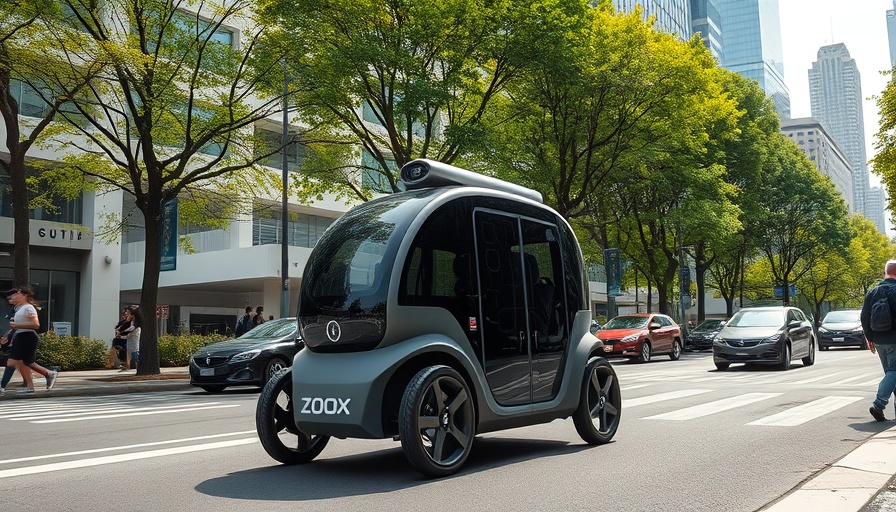
Zoox robotaxi on a bustling city street with skyline backdrop.

Zoox Robotaxi: A New Era of Automated Transport in San Francisco

As urban landscapes continue to evolve, Zoox stands at the forefront of innovation with its unique robotaxi design, which promises to change the way we navigate city streets. Unlike traditional taxis or even other autonomous vehicles, Zoox’s design shakes up conventional automotive formats, aiming to encourage a more interactive and social travel experience.

A Roller-Coaster Experience in a Robotaxi

During a recent trial ride in San Francisco, reporters from The Standard hopped into the Zoox, a vehicle likened to a "toaster on wheels." This driverless vehicle, while adorable in its appearance, presented a somewhat bumpy journey reminiscent of amusement park rides. With unique bidirectional movement and a gondola-style interior facing inward, the ride promised both excitement and a few unexpected jolts.

The Adventures of Riding Backwards

Choosing backward-facing seats, an option thoughtfully provided by the Zoox app to ease potential motion sickness, proved to be less than ideal for the passengers. Riding backward may have initially seemed fun, but as the vehicle navigated through twisting streets and responded unpredictably, the novelty quickly turned into a mild sense of discomfort. Unlike its smoother competitors, such as Waymo, the Zoox’s spunky reactions to road conditions had both reporters feeling a bit queasy by the end of the trip.

More Than Just a Ride: The Zoox Experience

Beyond its quirky design and the initial roller-coaster effects, riding in a Zoox offers passengers interactive features that enhance the journey. Each rider can control their personal climate settings, but the shared experience comes from listening to one chosen playlist during the ride, reinforcing a feeling of togetherness. The choice of music reflects a unique blend of social interaction and technological innovation, contributing to an atmosphere of collective enjoyment.

The Future of Urban Mobility: Predictions and Insights

As technology continues to advance, the implications of autonomous vehicles like Zoox extend beyond mere transportation. Experts predict that as these vehicles become increasingly integrated into urban mobility systems, city planning will shift to accommodate a new wave of transportation solutions. This could potentially ease traffic congestion, decrease carbon emissions, and create more pedestrian-friendly urban environments, ultimately transforming cities like San Francisco into smarter, more efficient spaces.

Counterarguments: Safety and Public Acceptance

While the excitement surrounding autonomous vehicle technology is palpable, concerns loom large regarding safety and public acceptance. Not everyone shares the enthusiasm for driverless vehicles, as incidents in the past have raised questions about reliability and accountability. Further, significant changes in transportation systems often meet resistance from residents who may feel uneasy about relinquishing control of their travel. It’s important to balance the innovation of entities like Zoox with transparency and community engagement to foster trust.

Decisions Made Easier with Autonomous Vehicles

In a world where transportation can often feel like a chore, Zoox represents a shift towards making travel decisions easier and more enjoyable. Families, commuters, and solo travelers alike stand to benefit from the ease of ordering a ride via an app that caters to their preferences. Moreover, vehicular stress may become an issue of the past as the focus shifts toward making every journey an enrichment through interaction and entertainment.

Getting Comfortable with the Unforeseen

For those planning to experience the Zoox robotaxi, familiarizing oneself with its unique features might help alleviate initial discomfort. While the thrill of riding in an unorthodox vehicle is enticing, it's also crucial to acknowledge the potential for motion sickness when facing backward. Discussing fears and experiences among fellow passengers can foster a sense of community during the ride, ensuring everyone is at ease.

Join the Conversation

As cities like San Francisco embrace new technologies, now is the time to engage in discussions about the future of mobility. Whether it’s through online forums or community meetings, sharing experiences like those in the Zoox can help shape the trajectory of how these vehicles are integrated into our daily lives. Understanding the nuances and challenges of automated transport can inform a more thoughtful approach to city planning.

In conclusion, as we navigate through a transforming world of autonomous transport, Zoox offers intriguing insights and experiences that are both refreshing and thought-provoking. Engaging with this new technology paves the way for discussions about safety, community, and the future of urban landscapes. Embrace the adventure, but also prepare for the unexpected – every ride tells a story.

San Francisco Spotlight

Write A Comment

*
*
Related Posts All Posts

Sanofi's $2.2 Billion Buyout of Dynavax: Implications for the Vaccine Landscape

Update Sanofi's Bold Move: A $2.2 Billion Acquisition of Dynavax In a significant step within the realm of healthcare, Sanofi has agreed to a $2.2 billion acquisition of Dynavax Technologies Corp. This latest merger, valued at $15.50 per share, represents a remarkable 39% premium over Dynavax's previous closing price and is stirring up various discussions in the Bay Area life sciences sector. What Does This Acquisition Entail? The deal aims to augment Sanofi's vaccine portfolio by incorporating Dynavax's marketed hepatitis B vaccine and an experimental shingles vaccine currently in early human trials. As the public sentiment towards vaccines evolves, this acquisition is seen as a strategic maneuver to bolster vaccine offerings, particularly in adult immunizations, where rites of passage and declining vaccination rates are pressing concerns. Why Now: The Timing of the Deal The timing is telling. Shortly before this acquisition, Sanofi faced a setback when the FDA rejected its experimental multiple sclerosis drug, tolebrutinib. This rejection marked a notable challenge in Sanofi's pipeline, causing a drop in investor sentiment. As such, acquiring Dynavax is a move to ensure alternative growth avenues and maintain a bullish outlook amidst challenges in their broader product offerings. Sanofi's Strategy: Building a Diverse Vaccine Portfolio The Dynavax acquisition is particularly notable as Sanofi, currently reliant on its asthma drug Dupixent, seeks to diversify its offerings ahead of anticipated patent cliffs. Analysts have observed that the addition of an adult hepatitis B vaccine and a potentially lucrative shingles vaccine could significantly enhance Sanofi's revenue base. In a market inundated with challenges, such as declining flu vaccine uptake, this strategic acquisition seems both prudent and timely. The Vaccination Landscape: Shifting Dynamics The market for vaccines, especially in the U.S., is undergoing dramatic shifts. The U.S. Health Secretary Robert F. Kennedy Jr. is reportedly re-evaluating longstanding immunization policies, contributing to an environment where public trust in vaccines is being tested. Despite these challenges, the shingles vaccine, notable for its revenue potential, could provide a bright spot in Sanofi's strategy. Understanding Dynavax: A Closer Look at the Company Dynavax's Heplisav-B vaccine has already shown promising sales performance, generating $90 million in the third quarter alone, with expectations of peak annual sales reaching approximately $609 million in the U.S. This aligns with Sanofi's rigorous focus on expanding its vaccine revenue as it confronts various market realities. Challenges and Counterarguments: Navigating a Difficult Market While the acquisition signifies a positive forward momentum for Sanofi, there are inherent risks. Vaccine markets have grown volatile—fluctuating immunization rates due to pandemic fatigue, coupled with price competition, pose challenges to profit margins. Analysts caution that the projected revenue forecasts may come under pressure as both companies adapt to evolving healthcare landscapes. Looking Ahead: Future Predictions and Market Trends As healthcare evolves, so too must companies like Sanofi. The integration of Dynavax into their pipeline is anticipated to bolster their competitive edge in adult immunizations. Should Dynavax's shingles vaccine prove effective in broader trials, it could open up lucrative new revenue streams and validate Sanofi’s strategic approach amidst an ever-changing vaccine landscape. In conclusion, the $2.2 billion acquisition of Dynavax reflects Sanofi's commitment to enhancing its vaccine offerings. For parents and adults in the U.S. and internationally, it underscores the importance of staying informed about vaccine advancements that may impact health outcomes in their communities. With these developments, there's an ongoing need to foster healthy discussions about immunizations. Engaging in conversations about vaccines and supporting initiatives can help pave the way for stronger public trust and engagement in this transformative field.

Exploring the Future of Cannabis Banking Opportunities with Tasi Bank

Update Shaping the Future of Cannabis Banking The cannabis industry has experienced a significant transformation over the past few years. Once viewed as taboo, it has now become a booming legal market. While many banks still hesitate to finance cannabis businesses due to federal regulations, Tasi Bank in San Francisco has found a unique niche. With assets of just $700 million, Tasi Bank is breaking boundaries and seizing opportunities by offering financial services tailored specifically for this industry. Why Banks Are Hesitant Many financial institutions are wary of the cannabis sector. The lingering stigma, coupled with the complexities of federal regulations, makes securing banking services a daunting task for dispensaries and cannabis producers. Banks fear repercussions from federal authorities since cannabis remains a Schedule I substance under federal law. This reluctance has left a substantial gap in the market, one that Tasi Bank aims to capitalize on. Tasi Bank's Unique Approach Dave Joves, president of Tasi Bank, sees opportunities where others see risk. His strategy involves building relationships with legal cannabis businesses in California. Through tailored banking solutions, Tasi Bank is not only supporting these businesses but is also advocating for a broader acceptance of the industry. Joves firmly believes that as attitudes toward cannabis evolve, so too will the financial landscape surrounding it. The Future of Cannabis Banking Looking ahead, Joves foresees a time when cannabis banking will be much more mainstream. As more states legalize cannabis use and as conversations around its benefits continue, institutions like Tasi Bank will likely be in a prime position to thrive. This trend may lead to more banks entering the space, potentially reshaping the financial services landscape entirely. How Reclassification Could Impact the Industry The reclassification of cannabis at the federal level could have far-reaching implications. Should cannabis be removed from its Schedule I status, it could open the floodgates for traditional banks to enter the market, leading to greater competition and innovation. Joves predicts that this shift will not only benefit cannabis businesses but also the economy as a whole by boosting job creation and tax revenues in the growing industry. Local Insights on Cannabis Banking The Bay Area, particularly San Francisco, is at the forefront of this movement. Local attitudes toward cannabis have softened, and many residents now view it as a legitimate business. With Tasi Bank setting an example, there is a growing demand for banking services that accommodate cannabis businesses, giving rise to specialized products and services in the local banking landscape. Community Impact and Support Supporting cannabis businesses is not just about finance; it’s about building a community. Tasi Bank is committed to investing in initiatives that promote the responsible consumption of cannabis and support local growers and producers. Their success in this area showcases the potential for other banks to foster community relationships and contribute positively to the local economy. Conclusion: Stay Informed and Engage As cannabis banking continues to evolve, staying informed is vital for anyone interested in the industry or the implications of financial services related to it. Engaging with local businesses and financial institutions can provide deeper insights into how these changes will affect both the community and economy. With Tasi Bank leading the charge, the future of cannabis banking looks promising.

San Francisco Real Estate in 2025: AI Boom Ignites Housing Demand

Update The Unprecedented Year for San Francisco's Housing Market In 2025, the San Francisco residential real estate market took an unexpected turn, contradicting traditional seasonal patterns. With an influx of high-paying jobs in artificial intelligence (AI), this vibrant city witnessed a significant resurgence in home buying, with buyers scrambling for properties that seemed unviable just months earlier. Despite challenges like rising tariffs and overall economic uncertainty, a dynamic shift fueled by tech growth saw the market flourish in fall compared to the cold spring. AI and Its Impact on Housing Demand The proportion of high-income talent flooding into San Francisco, courtesy of its booming AI sector, became a primary catalyst for the region's housing frenzy. A recent analysis by Redfin highlighted that pending sales jumped a remarkable 17% by September 2025, painting a vivid picture of demand amid dwindling inventory. Tech professionals accustomed to substantial salaries and bonuses are now opting for properties that cater to their lifestyle preferences, such as fixer-uppers situated in attractive neighborhoods like Pacific Heights, where investment potential is pronounced. Shifts in Buying Patterns: Fixer-Uppers Make a Comeback For years, the notion of purchasing properties needing substantial renovation seemed to fade as buyers opted for luxury, move-in-ready homes. However, the market's latest trends indicate a reversal, spurred by emerging buyers willing to invest significant sums into properties requiring modernization. As broker Nina Hatvany noted, buyers recently overlooked long-standing listings with limited price tags, bidding up homes significantly above their asking prices. The Market Resurgence: Seasonal and Economic Dynamics Historically, spring is the prime season for real estate transactions, but 2025's patterns painted a different picture. Groundhog Day indicated a slow start to the year, thrusting buyers into retreat due to economic disturbances caused by tariff discussions. Yet by late summer and into fall, confidence began to bloom once more, pushing buyers into a competitive frenzy. The luxury market particularly benefitted from this renewed vigor, as evidenced by the record-breaking sale of a $42 million home in October, marking a new chapter in San Francisco real estate. Looking Forward: Future of San Francisco's Housing Market As we venture into 2026, the narrative evolves with the continued rise of AI companies expected to go public. This burgeoning pool of newly minted buyers could further elevate competition in a city already witnessing price recovery signs. Patrick Carlisle of Compass articulated that San Francisco's market stands out notably within the Bay Area, hinting at sustained strength ahead against the backdrop of national trends that might be faltering. Challenges Ahead: Housing Affordability Concerns Despite the current optimism, challenges remain. As prices inch upwards, especially in the luxury segment, concerns loom over affordability for middle-income families. Mayor Daniel Lurie's proposed family zoning plan endeavors to accelerate housing development targeting diverse needs and styles to accommodate a growing city population. Yet, critics raise alarms about an overemphasis on luxury developments possibly pushing local communities further out of reach. Conclusion: Embracing Change in a Thriving Market San Francisco's housing market reflects a dynamic interplay of economic forces, shifting preferences, and demographic trends fueled by the AI boom. As such changes resonate through the fabric of the city, residents and prospective buyers alike must navigate this evolving landscape with foresight. Keeping an eye on forthcoming developments and aligning housing strategies will be essential as we transition into an exciting yet potentially turbulent 2026.

Terms of Service

Privacy Policy

Core Modal Title

Sorry, no results found

You Might Find These Articles Interesting

T
Please Check Your Email
We Will Be Following Up Shortly
*
*
*