Add Row
Add Element
cropper
update

{COMPANY_NAME}

cropper
update
Add Element
update

CALL US

+1 (415) 993-3922

Add Element
update

EMAIL US

robert@sfpressmedia.com

Add Element
update

WORKING HOURS

Mon-Fri: 9am-6pm

Add Element

Add Element
  • About Us
  • Contact Us
  • Advertise
  • Industry Feature
Add Element
  • update
  • update
  • update
  • update
  • update
  • update
  • update
April 23.2025
3 Minutes Read

Reviving Lawlessness at Civic Center Inn: A Hope for Change in San Francisco?

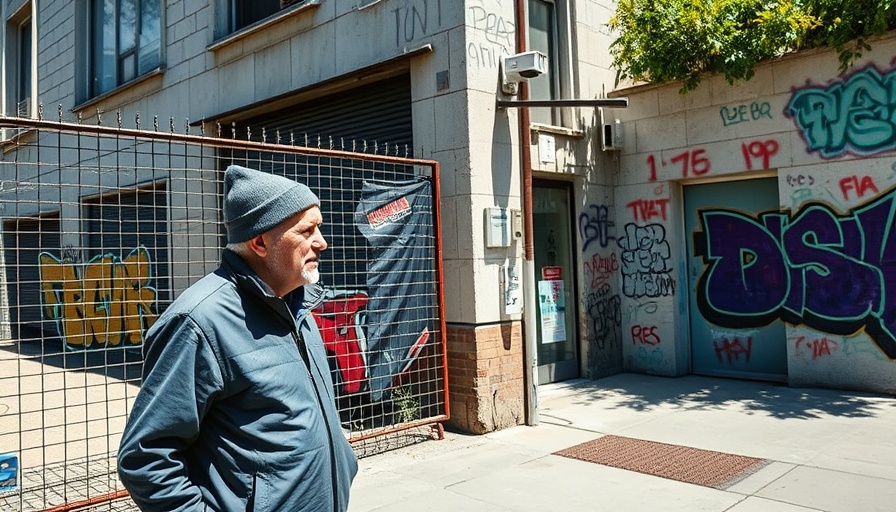
San Francisco local news: urban scene with man by fenced building.

Lawlessness Surrounds the Civic Center Inn in the Tenderloin

The Civic Center Inn, once a budget hotel serving San Francisco's most vulnerable populations, stands as a haunting reminder of urban decay in the Tenderloin district. Closed since 2023, this 82-room hotel has become a refuge for more than just those seeking low-cost accommodation. The building now attracts squatters, drug users, and is swarmed by vermin, intensifying the frustrations of local residents and businesses.

The Backstory: Why the Civic Center Inn Closed

For many years, the Civic Center Inn was known as one of the cheapest hotels in the city, boasting rooms for under $60 a night. However, consistent issues with crime, health hazards, and deteriorating living conditions contributed to its eventual decline. Despite its affordability, the Inn could not sustain its business amid increasing lawlessness. By 2023, it ceased operations, leaving the building to rot as its surroundings worsened.

Local Impact: A Strained Community

As the closest neighbor to the Civic Center Inn, Reverend Paul Trudeau runs the City Hope Cafe next door. This community hub is increasingly overwhelmed by the spillover from the abandoned hotel. 'Every day, we see people using drugs, urinating, and sleeping on the sidewalks adjacent to our cafe,' Trudeau notes. With both the cafe and the Inn next to each other, the reviving environment is sagging under the pressure of neglect.

Efforts to Address the Crisis: What's Being Done?

The San Francisco city government has attempted to manage the fallout from the abandoned hotel. Outreach teams engage with drug users, trying to provide resources while the police address emergencies. Recent city initiatives, such as cleaning crews and improved fencing around the property, have shown some commitment to restoring order. Supervisor Bilal Mahmood even described these clean-up efforts as a shift 'from grime to sublime,' but for many residents, this is merely lipstick on a much larger problem.

Community Voices: Calls for Change

Despite these small steps, local narratives paint a bleak picture. Residents recount stories of vandalism, drug use, and despair. Saturday rituals involve seeing individuals sprawled on sidewalks and in alleyways, which deeply impacts the community's sense of security. Far too many doors of the vacant hotel remain ajar or ripped off altogether, creating a breeding ground for crime rather than housing or rehabilitation.

An Innovative Solution: Revitalization Plans

In a hopeful turn, Reverend Trudeau hopes to purchase the Civic Center Inn to transform it into a sober living space. 'If the bones of this building are good, I would love to start a campaign for sober living here, helping more than 60 people change their lives,' Trudeau expressed. His vision is not just about restoring a building, but remaking lives and the community. Such a project could signify a new chapter in a neighborhood craving positive change.

Future Implications: Neighborhood Transformation

While the present is marked by chaos, the potential future is beckoning for change. Community initiatives and proposals can access funding through grants or local fundraising efforts. If Reverend Trudeau’s vision materializes, it might initiate a wave of revitalization that could encourage other businesses and nonprofits to invest in the Tenderloin district. Once again, the Civic Center Inn could evolve from a symbol of neglect to a beacon of hope.

Conclusion: The Call for Community Support

Neighboring businesses and citizens of the Tenderloin maintain a watchful eye on the developments surrounding the Civic Center Inn. The revitalization efforts led by local advocates are crucial, and community support is needed to transform challenges into opportunities. If you want to join the movement for change in the Tenderloin, consider reaching out to City Hope and Reverend Trudeau’s initiatives to help make a meaningful difference.

San Francisco Local News

Write A Comment

*
*
Related Posts All Posts

San Francisco's Kids Envision Alcatraz as a Fun-Filled Playground

Update Dreaming Big: San Francisco's Youngsters Reimagine Alcatraz Alcatraz Island, often synonymous with notorious incarceration, is undergoing a reimagining, at least in the minds of San Francisco's children. In a groundbreaking initiative led by local elementary students, Alcatraz is envisioned as a playground rather than a prison—an emblem of childhood creativity and community spirit. Students from the Tenderloin Community School, Bessie Carmichael Elementary, and Redding Elementary participated in a mock legislative process, presenting their visions for the island's future ahead of the government's consideration of reactivating Alcatraz as a federal prison. Preserving Nature: A Sanctuary for Birds One of the standout ideas came from nine-year-old Allen Troung, who advocated transforming Alcatraz into a sanctuary for birds. "We need to keep them safe from vehicles that can crush them," Troung expressed confidently. His proposal reflects a growing sentiment among the younger generation regarding environmental conservation. Not only does he address humanitarian concerns for the birds, but also suggests an innovative approach to maintaining the island that does not heavily rely on government funding. Troung's message resonates with the increasing importance of protecting wildlife from urbanization—a theme echoed by other youth-driven initiatives across the nation. Playtime on an Island: A Dream Playground Perhaps the most ambitious proposal came from Heily Zelaya-Zapata, another young visionary, who dreams of creating a grand playground on Alcatraz. The ten-year-old confidently articulated her plans for a safe, inclusive play space, complete with various play structures tailored to the needs of the community. "Would a park on a rocky island surrounded by pounding surf be safe for small children?" asked one of the mock supervisors. Zelaya-Zapata responded with assurance, promising to include necessary safety measures. Her imaginative thinking reflects a broader trend where children are encouraged to participate in community decision-making, blending playfulness with serious civic engagement. A Historical Parallel: Alcatraz as a Playground Interestingly, the nostalgic views of Alcatraz echo the memories of those who previously lived on the island during its time as a federal prison. In its past, approximately 100 children lived there, and many recall their childhood experiences of exploring playgrounds that the prison environment inadvertently provided. One former resident recalled playing baseball and flying kites on the island, emphasizing the duality of Alcatraz as both a place of confinement and a childhood paradise. This historical context enriches the new generation's proposals, showcasing a contrasting view of the island. Fostering Community Connections The ongoing dialogue surrounding Alcatraz reveals a larger narrative about community engagement. Events like mock hearings provide a unique platform for voices often marginalized in political discussions. The involvement of local supervisors, such as Matt Dorsey and Myrna Melgar, reflects a commitment to including youth perspectives in San Francisco's policy-making. The future of Alcatraz may very well rest on the shoulders of its youngest citizens, whose contributions matter deeply to the community's cultural evolution. Hope for a New Future: The Children’s Vision The whimsical proposals from San Francisco’s children present a fresh narrative for Alcatraz that contrasts sharply with formal government plans. While the future remains uncertain, these young advocates demonstrate that imagination and creativity can inspire far-reaching change. With each heartfelt suggestion, they invite adults to envision Alcatraz not as a relic of imprisonment but as a space that embodies freedom, joy, and community for future generations. Their dreams reflect values that are crucial to both local and global societies: sustainability, play, and inclusivity. Ultimately, as San Francisco debates what to do with Alcatraz Island, the voices of its children offer a compelling call to action. Parents and community members are encouraged to support child advocacy initiatives that promote public engagement and spark discussions about the future. These kids are not just dreaming—they're laying the groundwork for hope.

San Francisco Immigration Court's Dramatic Cuts: What It Means for Asylum Seekers

Update San Francisco's Immigration Court Crisis: The Impact of Leadership ChangesAs of December 2025, the San Francisco immigration court has faced an unprecedented reduction in its judicial staff, plummeting from 21 judges to just 7. This alarming trend comes as two of the remaining judges, Patrick S. O’Brien and Joseph Y. Park, prepare for retirement, mirroring a nationwide pattern of significant staffing cuts under the current administration for judges perceived as lenient on asylum cases.After the Department of Justice made the controversial decision to terminate 12 judges in a single day, the mounting case backlog soared to over 120,000, marking it as the largest in California. This development has raised serious concerns among legal advocates and current judges about the potential disregard for due process and fairness in asylum hearings. Former judge Shira Levine expressed deep apprehension that the integrity of the judicial process might be compromised under such pressure.The Erosion of Due Process: A Judicial DilemmaThe strategic firings appear motivated by the desire to reduce the rate at which asylum is granted, which nationally averages around 41%. According to various reports, judges who were dismissed had been notably more likely to grant asylum than their colleagues. It suggests a deliberate aim to align judicial outcomes with administration goals, despite the inherent risk such actions pose to the fairness of the asylum system.In a courtroom scenario where Judge Arwen Swink indicated her discontent regarding possible repercussions for more compassionate rulings, it raises an essential question: How can judges operate fairly when they live under the threat of dismissal for decisions that disobey administrative directives?Case Backlogs and Asylum Seekers: What Does it Mean for Justice?The staggering backlog is not merely a statistical issue; it directly affects the lives of thousands seeking refuge. Asylum seekers in the Bay Area, many of whom come from countries fraught with turmoil, face an uncertain future. Without timely hearings, these individuals risk indefinite detention and potential deportation to countries where they could face persecution or violence.Despite the challenging environment, many immigrants strive to navigate this complex situation. For example, one asylum seeker expressed fear about being sent to Ecuador, pointing out the previous agreements that could lead to her being deported back to her home country. Such testimonies emphasize the personal stakes involved and highlight the human cost of bureaucratic inefficiencies.Insights into the Wider Implications of Judge FiringsThis purge of judges echoes across the country, raising alarms about the overall direction of immigration courts nationwide. With similar dismissals occurring in cities like New York, Boston, and Chicago, these changes signal a broader trend that could remold the landscape of immigration justice. The consequences threaten not only to erode the asylum system but also to undermine public trust in the legal processes established to protect vulnerable populations.A recent trend shows that immigration courts are increasingly viewed as agents of government policy rather than independent adjudicators. This transformation raises critical questions about judicial independence and the very foundations of justice in immigration matters.What Lies Ahead for San Francisco's Immigration Court?Looking to the future, the situation in San Francisco's immigration court urges all involved—legal advocates, community members, and policymakers—to engage in re-evaluating the system. Safeguarding the rights of asylum seekers must not depend on the whims of administration but rather on a robust commitment to due process and equity.The looming question hanging over this court's future is whether enough effective advocacy can breathe life back into a system facing unparalleled threats. Advocating for an immigration court that is independent, fair, and just will require grassroots community support and sustained pressure on national policymakers.The dramatic shift within the San Francisco immigration court serves as a potent reminder: the struggle for justice and equity in the American immigration system is far from over, and active participation by the community is essential in safeguarding these crucial rights.As the courtroom echo fades, the call to action has never been more pressing. It is vital for communities across the nation to stay informed, engaged, and proactive in defending the rights of those seeking refuge and justice.

Ricardo Peña: The Heartbeat of San Francisco's Mission District

Update Celebrating the Life of a Community Cornerstone The Mission District of San Francisco is in mourning as it commemorates the life of Ricardo "El Tigre" Peña, a man who was not only a skilled Aztec dancer but also a pillar of the community. At 54, Peña left this world unexpectedly on a Monday morning due to an apparent heart attack. Cherished by many, he was described as an "Aztec warrior of love," bringing joy and cultural enrichment to those around him. A Guardian of Tradition Having lived in the Mission for over three decades, Peña was a dedicated teacher of Danza Azteca and traditional drumming, instilling the values and history of his Nahuatl Indigenous heritage into multiple generations. The sentiments expressed by Roberto Hernandez, the CEO of Cultura y Arte Nativa de las Americas, reflect a sentiment that resonates throughout the district – Peña was seen as a guardian angel and the heartbeat of the community. Peña, along with his wife Connie Rivera, ran Mixcoatl, a vibrant Mexican gift shop that stood as a cultural touchstone at 24th Street and South Van Ness Avenue. Through their shop, they fostered a love for Mesoamerican arts and crafts, where it was common to see Peña displaying traditional items like sage and luchador masks, further connecting the community to its cultural roots. Danza Azteca: A Dance of Prayer In a documentary that captured Peña's essence in 2022, he expressed the significance of danza, clarifying that it was much more than performance; it served as a form of prayer, a way to honor his ancestors. This perspective shaped not only his life but also the lives of those he mentored in danzas. Peña's daughter, Xochi, shared her gratitude for her parents’ commitment to their traditions, emphasizing how they inspired her and others in the community. “I have been dancing since I was in the womb,” she remarked, illustrating how deeply embedded the cultural practices were in their household. Community Impact and Lasting Legacy Beyond his role as a dancer and teacher, Peña dedicated himself to various community activities, notably volunteering with the Calle 24 Cultural District to decorate the neighborhood during festivities like Día de Los Muertos. His unparalleled dedication fostered a spirit of unity, displayed through his calm demeanor and generous heart. “He was a great listener who served his community,” shared Martina Ayala, executive director of the Mission Cultural Center for Latino Arts. Her remark underscores Peña's importance as not just a cultural figure, but also as an approachable individual who made people feel valued and heard. His impact extended to several local businesses, where he was both a supporter and a familiar face. Remembering the Man Behind the Warrior Friends and family uniformly describe Peña as a generous, wise, and peaceful person who brought people together. His legacy will be remembered not only through his teachings but also the warmth and kindness he shared with everyone he met. Many recounted personal anecdotes of his willingness to lend a hand or share wisdom, illustrating the love Peña cultivated within his community. “He was a man who represented all of the Mission District and everything it stands for,” noted Victor Nhul, whose family ran a local business across from Mixcoatl. This sentiment encapsulates Peña's role not only as an individual but as an embodiment of the cultural essence that defines the Mission District. An Ongoing Celebration of Culture With the loss of Ricardo Peña, the Mission District faces the challenge of continuing his legacy. It's important to honor the values he embodied—respecting traditions and nurturing community connections. As Xochi poignantly stated, while his physical presence is no longer, his spirit will continue to resonate whenever she dances. This speaks to the enduring impact of cultural traditions, which can inspire future generations. As the Mission cherishes his memory, it also brings forth the opportunity for community members to reflect on their connections to their own heritage. The practices that Peña upheld need to be nurtured and passed down, ensuring that the heartbeat of the Mission continues, rich with the spirit of love, culture, and tradition that he instilled in his community. Join Us in Continuing His Legacy In these times of grief and remembrance, consider honoring Ricardo Peña's legacy through action. Engage with your community and participate in cultural events that celebrate San Francisco's rich heritage. By doing so, you not only pay tribute to Peña but also contribute to the ongoing story of the Mission District's vibrant community.

Terms of Service

Privacy Policy

Core Modal Title

Sorry, no results found

You Might Find These Articles Interesting

T
Please Check Your Email
We Will Be Following Up Shortly
*
*
*