Add Row
Add Element
cropper
update

{COMPANY_NAME}

cropper
update
Add Element
update

CALL US

+1 (415) 993-3922

Add Element
update

EMAIL US

robert@sfpressmedia.com

Add Element
update

WORKING HOURS

Mon-Fri: 9am-6pm

Add Element

Add Element
  • About Us
  • Contact Us
  • Advertise
  • Industry Feature
Add Element
  • update
  • update
  • update
  • update
  • update
  • update
  • update
May 23.2025
3 Minutes Read

Spitting Incident Highlights Political Tensions and Legal Consequences

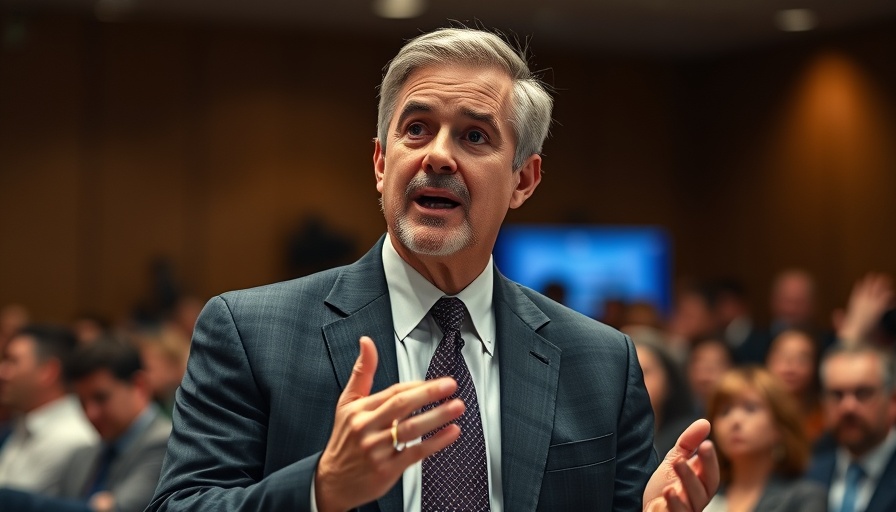
Man speaks passionately about legal consequences of spitting assault.

Understanding the Assault Charge: What It Means

The recent arrest of Emily Gabriella Sommer for spitting on Ed Martin, the former acting chief prosecutor for Washington, has raised significant questions about the legal implications of assaults involving bodily fluids. Spitting, while often dismissed as a trivial act, can have serious legal consequences. According to U.S. law, it is classified as assault, especially when the victim is a government official—making Ms. Sommer’s actions punishable by law. This incident highlights the growing tensions surrounding public figures, particularly those associated with controversial political movements.

The Context of Political Polarization

The incident unfolded in a highly charged political atmosphere. Ed Martin was notably involved in prosecuting those linked to the January 6 Capitol riot, a fact that garners strong emotions from the public. His role as a prosecutor and his outspoken support of the Trump administration positioned him as a contentious figure, intensifying the divide between supporters and critics. Sommer's actions can be seen as a reflection of this polarization, illustrating how societal frustrations manifest in extreme behavior.

The Aftermath of the Incident: Reactions and Consequences

Following the incident, Ms. Sommer took to social media to mock Martin, evoking strong reactions from various quarters. This behavior could be interpreted as an attempt to not only justify her actions but also to become a part of the larger narrative surrounding political protests. The repercussions for Sommer go beyond legal charges; they include potential social backlash and a growing public discourse on acceptable forms of political expression. As political tensions rise, acts of aggression may become increasingly scrutinized.

Legal Precedents and Public Response

Historically, cases where individuals were charged for spitting carry legal precedents that vary state by state. In many jurisdictions, unless there are aggravating factors—such as the alleged victim's profession or health status—cases of this nature might go unpunished. Similar cases in the past, such as one involving a postal worker, showcase that while the law holds spitting as an assault, consistency in prosecution is challenging. Societal reactions to such cases also play a pivotal role in determining the outcome of legal proceedings.

Taking a Stand: Emotional and Viewpoint Divides

For many, Sommer's act raises questions about civil discourse and the limits of public protest. While some view her actions as a bold stand against perceived corruption, others see it as a troubling sign of rising hostility. Such a divide mirrors broader societal rifts where public figures often find themselves vilified or idolized, leading to extreme reactions. The incident serves as a catalyst for discussions on how society engages with those it considers adversaries.

The Bigger Picture: Violence in Political Discourse

This episode is part of a larger troubling trend within political discourse in the U.S. and beyond, where differences in ideology often lead to hostile confrontations. Vandalism, threats, assault, and other aggressive acts are becoming more common at political events and gatherings. Awareness and understanding of this trend can encourage communities to engage in dialogue that prioritizes respect over hostility, aiming to bridge divisions instead of deepening them.

Ultimately, the incident involving Emily Sommer and Ed Martin sheds light not only on an assault charge but also on the state of political discourse in the country. It serves as a reminder of the responsibility individuals have in expressing dissenting views without resorting to violence or disrespect. As citizens navigate these tumultuous times, fostering constructive dialogue around contentious issues will be essential in shaping a healthier political environment.

News

Write A Comment

*
*
Related Posts All Posts

Ice Storm Approaches: How New York and New England Are Preparing

Update Anticipation Builds as New York and New England Brace for Severe Ice StormA fierce winter storm is poised to impact millions across New York State and New England, with severe weather warnings in effect as forecasters predict significant ice accumulation. Over the weekend, the Midwest was battered by the same storm that is now making its way into the Northeast, leading to potential hazards for residents and commuters alike.What to Expect from the Ice StormThe National Weather Service has issued ice storm warnings for northern parts of New York and Vermont, predicting up to seven-tenths of an inch of ice by Monday evening. This accumulation is expected to weigh down trees and power lines, creating the potential for widespread outages. Already, more than 30,000 customers in upstate New York faced power loss by Sunday morning, as freezing rain began affecting the area. Governor Kathy Hochul has warned residents to prepare for hazardous travel conditions due to near whiteout scenarios resulting from heavy snow and strong winds.The Impact of Winter Storms on Local CommunitiesIn the Hudson Valley region, towns are on alert for freezing conditions. Reports from Hilton, NY indicated evacuees were relocated from the Hilton East Assisted Living Community due to reports of leaks caused by the melting snow and heavy rains. Citizens are encouraged to remain indoors, prepare emergency kits, and stay informed through local news stations.Comparative Analysis with Previous StormsThis upcoming ice storm is reminiscent of past winter disturbances in the Northeast, particularly one that brought historic snowfall to New York City just months ago. Experts are noting that similar conditions led to transportation disruptions and power outages, emphasizing the need for residents to heed warnings and take precautions. In light of historical data, ice storms can cause significant damage, leading to economic losses in local businesses due to closures.Travel and Commuting in the Face of AdversityOfficials predict this storm will disrupt holiday travel plans for many. Maine and New Hampshire are likely to see up to half an inch of ice, increasing risks on highways and local roads. Travelers should anticipate delays and possible cancellations, especially for flights, as air traffic congestion can compound issues during severe weather events. State officials are emphasizing public transit safety, urging riders to remain alert and prepared for unexpected delays.The Role of Community Resilience and PreparednessLocal governments across New York and New England are stepping up their responses. With emergency declaration protocols in place, communities are encouraged to watch for official updates and utilize resources like community centers, which often serve as warming stations during power outages. This proactive approach highlights the importance of community resilience during adverse weather conditions.Conclusion: Staying Informed and SafeAs New Yorkers and New Englanders brace for the upcoming ice storm, staying informed and prepared are key to navigating the impending challenges. Weather updates are being disseminated continuously through various media outlets, ensuring that citizens have access to real-time information. It's crucial for everyone to prioritize safety – stock up on essentials and remain indoors as much as possible.Stay safe and informed by checking local news channels and the National Weather Service website for ongoing updates on this severe weather front.

How Voters Are Reacting to Trump's Chaotic First Year in Office

Update Reflecting on Trump's Chaotic First Year: Voter Voices As we approach the end of 2025, the nation reflects on Donald Trump’s return to the presidency—a year marked by division and contention. While some voters view this period as one of progress, others are overwhelmed by dissatisfaction and regret. The stories of twelve voters from diverse backgrounds underscore deep divisions in how his performance is perceived. The Optimistic Perspective Jaime Escobar Jr., the mayor of Roma, Texas, embodies the voices of those who believe Trump has made meaningful strides, particularly in immigration and border security. He argues that the enforcement measures put in place have yielded positive results. Escobar indicates, "Progress is visible, and I see our communities feeling safer due to improved border controls." His optimism reflects a segment of voters who align with Trump's hardline approach, suggesting a belief that strong leadership is characterized by strict immigration policies. Widespread Discontent On the other end of the spectrum are voices expressing profound discontent. According to a recent Gallup poll, only 36% of Americans approve of Trump’s job performance—a stark reminder of the deep political fissures in the country. Many voters feel that economic challenges, particularly rising living costs and inflation, have eclipsed any perceived gains from his policies. As one voter, Karen Lemieux from Oregon, states, "The cost of groceries has skyrocketed, and my paycheck doesn't seem to stretch as far. I feel abandoned by this administration." This sentiment is echoed across party lines, indicating that economic stability is a critical issue regardless of political affiliation. A Regretful Vote Notably, among the respondents is someone who deeply regrets their choice to vote for Trump. Mark Simmons, a construction worker from Pennsylvania, shared his disillusionment: "I thought he would shake things up for the better, but all I see is chaos. I made a mistake, and I’m not alone in feeling this way." This kind of frustration captures a crucial element of the narrative surrounding Trump's presidency: that not all voters are steadfast in their support, and some are reconsidering their choices in light of unforeseen consequences. Approval Ratings Under Scrutiny Trump's declining approval ratings signal an uncertain future as voters grapple with his policies. According to a Pew Research study, his job approval stands even lower than in previous months, with many expressing skepticism about his leadership qualities. Only 37% of voters believe Trump cares about ordinary people, a drop from earlier in his term. This diminishing faith could spell trouble as the presidential landscape firms up in anticipation of the next election cycle. Challenges Ahead The future remains uncertain for Trump as challenges loom ahead. Issues such as immigration, economic stability, and international relations are contentious, influencing how voters view his administration's direction. As the electorate anticipates new policies, many are also preparing to hold Trump accountable for his promises—from tackling inflation to creating jobs. With the economy continuing to sour, public opinion could shift even further going into 2026. Takeaway: The Power of the Voter Voice The diverse opinions encapsulated in these voter reflections highlight a rich tapestry of experiences and emotions surrounding Trump's turbulent first year. As America stands divided, these narratives serve as a reminder of the complexities involved in leadership and governance. Voter sentiments may offer insights into future political dynamics that influence candidate strategies moving forward. As we move into a new year of political challenges, being an informed voter is crucial. Engage with your local representatives, voice your concerns, and be part of the conversation that shapes our nation's future.

The Shift in New College of Florida: From Progressive to Conservative Education

Update From Progressive Roots to Conservative Curriculum The New College of Florida, a once-liberal bastion of education, is undergoing a significant transformation under Governor Ron DeSantis. Not long ago, the institution thrived as a haven for progressive thinkers, attracting students with its unconventional approach to education. Here, students designed their own classes without rigid grading systems, fostering a unique learning environment. However, with the onset of a conservative board and a shift in leadership, this identity is rapidly changing. The Impact of Conservative Leadership The new president of New College, Richard Corcoran, characterizes the college as previously dominated by a singular ideology, referring to it as 'a little Club Med.' The overhaul, initiated in early 2023, has brought about a complete restructuring of the curriculum as mandated by state law. No longer will students study gender studies or contemporary thinkers; instead, they will immerse themselves in classical texts like Homer’s 'The Odyssey.' This shift exemplifies a broader trend in American education, where the cultural and ideological battles play out in the changing landscapes of state institutions. A Reflective Look at Educational Paradigms The debate surrounding the merits of this ideological shift raises important questions about educational objectives. Is it beneficial to return to traditional Western canon texts at the expense of a more diverse curriculum? This move towards classics may resonate with some conservative leaders who prioritize classical education. Yet it also risks alienating students accustomed to progressive perspectives and course diversity. Student Reactions and Concerns The response from students has been mixed. Some express excitement about the emphasis on classical literature, believing it could enhance critical thinking skills. However, others feel a deep sense of loss for the open-minded discourse they once experienced. The new requirements and the introduction of sports teams, previously absent in the college’s culture, underline a significant departure from the school's original ethos. Future Implications for Higher Education in America As institutions across the country face similar ideological pressures, this transformation at New College of Florida might set a precedent for other state schools. Critics argue that such changes slow the progress of academia towards inclusivity and diversity of thought. The question now hinges on whether this conservative restructuring will provide a robust educational framework or merely reinforce a narrow viewpoint. Conclusion: An Ongoing Discussion in Education The evolution of New College serves as a poignant reminder of the ongoing struggles faced by educational institutions in addressing ideological divides. As parents and students navigate these changes, it's essential to remain informed and engaged with the issues impacting higher education. While the new curriculum may align with current political sentiments, it ultimately underscores a broader exploration of what education should look like in today’s diverse world.

Terms of Service

Privacy Policy

Core Modal Title

Sorry, no results found

You Might Find These Articles Interesting

T
Please Check Your Email
We Will Be Following Up Shortly
*
*
*