Add Row
Add Element
cropper
update

{COMPANY_NAME}

cropper
update
Add Element
update

CALL US

+1 (415) 993-3922

Add Element
update

EMAIL US

robert@sfpressmedia.com

Add Element
update

WORKING HOURS

Mon-Fri: 9am-6pm

Add Element

Add Element
  • About Us
  • Contact Us
  • Advertise
  • Industry Feature
Add Element
  • update
  • update
  • update
  • update
  • update
  • update
  • update
May 27.2025
3 Minutes Read

The Struggles of San Francisco's 16th Street Plaza: Local Voices Speak on Safety and Homelessness

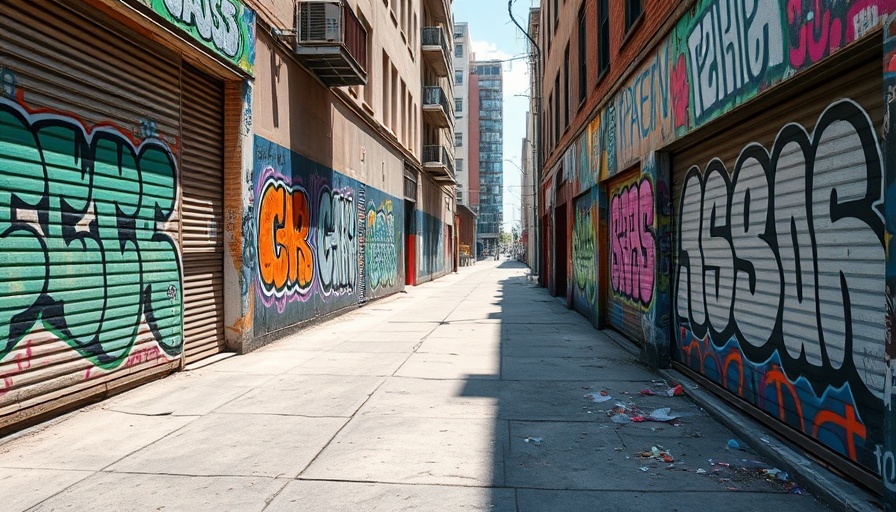
San Francisco urban street scene with graffiti and debris in local news context.

The Struggles of Local Businesses Amid 16th St. Plaza Crackdown

In the heart of San Francisco, the ongoing crackdown on 16th Street Plaza has sparked deep concerns not only among the homeless population but also local business owners. Juan C. Guerrero, who owns a driving school and has been part of the community for over 42 years, shared his bleak outlook: "Soon I’ll be homeless just like them." His words encapsulate the peril faced by businesses in an area that was once bustling with life. Guerrero, like many, feels a tightening grip as foot traffic dwindles, directly impacting sales and the ability to maintain a home.

Police Presence: Just a Measure of Control?

Mayor Daniel Lurie’s administration has deployed a police mobile command unit to the plaza in a bid to combat crime. While Guerrero acknowledges that this has contributed to a drop in violent incidents, he emphasizes that it falls short of addressing the root causes of the turmoil. A survey of the area reveals a stark contrast in activity levels; some spots are teeming with people, while others resemble ghost towns. This inconsistency raises questions about the effectiveness of law enforcement as a long-term solution to social issues.

Community Voices: Perspectives on Homelessness and Safety

The crackdown has led to visible divisions within the San Francisco community. Residents and business owners witness the struggles of those living on the streets, prompting a spectrum of emotional responses. The fear of homelessness becomes a reality for individuals like Guerrero, who find themselves caught in a cycle of despair. This sentiment resonates deeply within the community, pushing residents to reconsider their viewpoints on homelessness, public safety, and how these issues intertwine.

Local Business Struggles: The Economic Impact of the Crackdown

Guerrero’s plight is not isolated. The crackdown on public spaces has a cascading effect on local businesses that rely heavily on foot traffic and engagement. With fewer vendors operating, like the absence of food vendors at various BART stations, there’s a palpable decline in opportunities for economic interaction. The decline of businesses contributes to a weakened community fabric, underscoring the urgency for city council decisions to foster initiatives that support both business and community welfare.

Community Initiatives and their Importance

In light of current events, it’s vital for local governance to consider initiatives that address homelessness while simultaneously revitalizing business areas. Efforts could include enhanced community programs aimed at both creating job opportunities and supporting small businesses, which are crucial for recovery post-crackdown. Local councils should prioritize investing in neighborhood initiatives that foster safety and sustainability.

Future Predictions: What Lies Ahead for the Plaza?

The future of 16th Street Plaza hangs in the balance as community members and business owners ponder their next steps amid uncertainty. Will the city implement policies that can bridge the gap between safety and compassion? The potential for revitalization exists, but it requires focused leadership and a commitment to innovative solutions that align with the needs of both homeless individuals and local businesses.

Engaging with Local Issues: An Invitation for Action

The situation at 16th Street Plaza calls for an engaged community willing to demand action from its leaders. From advocating for supportive policies to attending city council meetings, every voice can contribute to change. Residents can become informed about local crime reports and participate in public community discussions to enhance awareness surrounding San Francisco politics related to homelessness and public safety initiatives.

No one should face the threat of homelessness alone, and collectively, the community has the power to enact change by supporting both humanitarian efforts and economic stability. Join the dialogue and take part in actions that shape the future of your neighborhood.

San Francisco Local News

Write A Comment

*
*
Related Posts All Posts

San Francisco's Bold Move to Buy PG&E Utilities via Eminent Domain: Hope or Hurdle?

Update San Francisco’s Growing Frustration with PG&E In the heart of San Francisco, power outages are becoming an all-too-common reality, stirring a potent mix of frustration and urgency among city officials and residents. Faced with yet another blackout during a key holiday shopping weekend, state lawmakers are using the moment to reignite a decades-long struggle over the city's energy future. Senator Scott Wiener has announced plans to introduce legislation in 2026 aimed at enabling cities to sever ties with Pacific Gas and Electric (PG&E) and establish publicly-owned utilities instead. Understanding the Context: A Troubled History PG&E, the utility giant long viewed as a stalwart provider of energy, has seen its reputation eroded by a series of catastrophic failures, including wildfires linked to its equipment and multiple bankruptcies. In recent weeks, a fire at a San Francisco substation left over 130,000 homes in the dark while local officials criticized the company for mismanagement and prioritizing shareholder profits over public safety. Former Mayor London Breed previously proposed a $2.5 billion buyout of PG&E’s infrastructure in 2020—an offer that went initially unaccepted, merely fueling further dissension between city leaders and the utility. The Rise of Municipal Utilities: A Viable Alternative? Support for municipal utilities is gaining traction as the city looks for stable, sustainable solutions to power delivery. San Francisco already operates a community choice aggregation program, CleanPowerSF, serving over 380,000 accounts. This program aims to provide cleaner energy options and local oversight, which proponents argue contrasts sharply with PG&E's recent failures. Angela Alioto, a long-time political figure in San Francisco, warns that despite the urgency, any drive to municipalize the power grid could be thwarted by PG&E's political clout within California. 'There are certain elected officials that will not go against them,' she stated, expressing skepticism about the city's chances. The Legal Path: Eminent Domain The current legal framework allows San Francisco to pursue the acquisition of PG&E's infrastructure via eminent domain, a process that is now picking up steam. Recent petitions to the California Public Utilities Commission (CPUC) demonstrate the city's intent and ability to finance the acquisition. Once a formal valuation of PG&E’s assets is established, San Francisco could take significant steps toward public ownership. Benefits of Breaking Free from PG&E Lawmakers argue that public utilities could provide more affordable, reliable electric service than PG&E, prioritizing community needs over shareholder dividends. Between rising costs and frequent outages, many residents are eager for a change. The ongoing crises surrounding PG&E give San Francisco the perfect political backdrop to push forward with these plans. Given the financial constraints, acquiring PG&E’s distribution assets might involve taxing or crafting new bond measures. Still, the city council remains optimistic that these financial hurdles can be overcome in a bid to control its energy grid. Public Sentiment and the Drive for Change The mood in San Francisco reflects a deep discontent with PG&E. Recent incidents have prompted residents to call for local control of their electric utility. Supervisor Matt Dorsey echoed this sentiment, stating, 'This is a utility that, frankly, we should have had more than a century ago.' For many, the question remains: Is it time for San Francisco to reclaim its energy independence? Many believe that transforming from a private utility to a public one is not just preferable but essential to ensure safe and reliable service. Looking Ahead: Future Utility Trends As clean energy technologies advance and demand for sustainable solutions rises, the push towards municipal utilities might set a precedent for other cities facing similar frustrations with private firms. Richard Hirsh, a professor of history, believes San Francisco’s situation is emblematic of a broader trend where municipalities across the country grapple with ownership of essential utilities. This emerging trend raises significant questions about who is best equipped to deliver energy services effectively. Cities like Portland and Ann Arbor are also reconsidering their reliance on large energy providers, echoing the conversation evolving in San Francisco. The Final Push: Mobilizing Community Support As legislative discussions unfold, community support will be crucial. Public awareness campaigns, organizing initiatives, and outreach efforts could galvanize residents to partake in the decision-making process. It’s not merely about restoring power when it falters; it’s about transforming the entire system into one that is more accountable to the public it serves. Mayor Lurie and other figures in City Hall are calling on citizens to make their voices heard in this pivotal moment for San Francisco’s future. With the energy landscape shifting under the weight of public opinion, San Francisco navigates a critical juncture—one that could redefine its relationship with electricity and set a welcome precedent for city control over vital services.

Exploring Parking on 18th Street: Community Insights and Future Trends

Update The Shifting Landscape of 18th Street ParkingAs urban environments evolve, so do the needs and expectations of their residents. A striking example is the ongoing discourse surrounding parking along 18th Street, a focal point in any bustling city, particularly in dynamic locations like San Francisco. The ramifications of parking availability transcend mere convenience; they directly affect community engagement, local businesses, and cultural experiences. In light of recent events and restructuring plans, the focus on improving parking infrastructure on 18th Street is timely and essential for fostering urban vitality.Understanding the Community Impact of ParkingParking is often viewed as a mundane necessity, yet it plays a pivotal role in the livelihood of local businesses and the overall community. Limited parking availability can deter visitors, especially during peak hours or special events, as discussed in reference to similar projects in Kansas City’s historic 18th & Vine district. Effective parking solutions can boost attendance at cultural events, positively impacting not just businesses but also community morale. By enhancing accessibility, the city can ensure that vibrant neighborhoods remain attractive destinations.Future Predictions: A Greener Approach to Urban ParkingThe ongoing conversations about parking on 18th Street also raise questions about future sustainability and innovation. As cities grapple with climate change and urbanization, the emphasis is shifting towards green solutions. Implementing eco-friendly parking infrastructures, such as solar-powered facilities or those that encourage public transport usage, could be transformative. Moreover, projects aimed at increasing walkability and reducing reliance on vehicles can significantly contribute to the city’s environmental goals while fostering stronger neighborhood connections.Counterarguments: Challenges and SkepticismDespite the push for parking improvements, there are voices raising concerns about prioritizing cars over pedestrian use and community spaces. Critics argue that enhancing parking facilities could promote increased vehicle traffic and diminish walkability, ultimately undermining the neighborhood's charm. These concerns echo similar discussions that have unfolded in San Francisco, where the debate about balancing parking needs with sustainable urban design is ongoing. Engaging the community in these discussions will be crucial for ensuring that future developments align with the values of the residents.The Role of Technology in Modern Parking SolutionsTechnology offers innovative solutions that could revolutionize how parking is managed on 18th Street. Smart parking systems can help streamline access by providing real-time data on availability, reducing congestion and frustration for drivers. Moreover, increased digital payment options and dynamic pricing could optimize the use of parking facilities, ensuring that they serve both the residents' needs and contribute to the local economy. Embracing such technologies could position 18th Street as a model for modern urban planning.Conclusion: A Call for Unified ActionIn conclusion, the conversation surrounding parking on 18th Street is a microcosm of broader urban challenges. Addressing these requires a collaborative approach that incorporates diverse perspectives from community members, local businesses, and city planners. By fostering dialogue and innovative thinking, we can develop effective strategies that enhance local accessibility while promoting sustainability and community engagement. If you're passionate about making a difference in your urban environment, now is the time to engage and voice your thoughts on this critical topic.

Discover How Yury's Love for Liya Inspired Their Journey in San Francisco

Update A Love Story from Ukraine to San Francisco: The Journey of Yury and Liya In a world where love can often transcend borders and hardships, Yury Budylova's heartfelt tale of romance and resilience highlights the power of connection. When Yury, a Ukrainian metalworker, first met Siberian beauty Liya Klets in 1977, he could not have predicted that a simple arrangement in his village to work on her uncle's gravesite would lead to a love that has flourished for nearly five decades. Tragedy brought them together, as Liya traveled from her home in Novosibirsk for her uncle’s funeral. Yury was captivated by her charm and warmth, igniting a spark that led him to traverse snowy landscapes to find her again. He recalls his moment of determination, flying on a propeller plane—admittedly frozen but resolute—just to make Liya his own. Emigration and New Beginnings in the Bay Area Fast forward to the crucial year of 1989, and Yury's journey took an even more significant turn as he and Liya made the difficult decision to emigrate to the United States, bringing along their widowed mother and children. Arriving in San Francisco with limited English, Yury's resolve to provide for his family ignited a fresh chapter in life. It wasn’t just about lights and fixtures; it became a story of perseverance, resilience, and love. He established his business, Yury’s Lights & Beyond, which has become synonymous with bespoke lighting solutions in the Bay Area. Located on Divisadero Street, the shop is a testament to Yury's passion, showcasing a dazzling array of vintage European lamps amidst a backdrop of chaos and creativity. Yury’s story parallels that of many Ukrainian immigrants who seek to find their place in the vast landscape of the United States, woven into the rich tapestry of San Francisco history. The Personal Cost of War: A Broader Context As Yury's story unfolds against a backdrop of tragedy and hope, the ongoing war in Ukraine reminds us of the plight of many souls displaced by conflict. In a report by Matthew Kupfer, we meet Yura Polishchuk, a teenager whose life was upended by Russia's invasion, ultimately leading him to San Francisco in search of safety and stability. This poignant reminder of current events amplifies the narrative of Yury and Liya’s love—both showcase the resilience of the human spirit amidst adversity. Likewise, efforts by volunteers, like Jane and Stas Yurkevich, who opened their homes to Ukrainian refugees, forge a sense of community that resonates deeply within the fabric of San Francisco. The Yurkevich family, having arrived from Uzbekistan, understand the refugee experience—they embody compassion and the willingness to help others in dire circumstances. Cultural Ties and Community Support These intertwined stories of Yury and Liya, alongside other refugee tales, remind us of the importance of cultural ties and community support in navigating the harrowing landscape of displacement due to war. The warmth of new friendships formed from shared experiences, albeit in different contexts, can welcome newcomers into their new homes, encouraging the local community to ensure that these transitions are not faced alone. Moreover, cultivating a public narrative around local businesses and community initiatives fosters solidarity among residents. Emphasizing cultural events that showcase Ukrainian heritage—like dances, festivals, and food—can build bridges and contribute to the rich cultural mosaic that defines San Francisco. The Power of Love and Resilience Yury and Liya’s enduring love serves as a beacon of hope for many immigrants adjusting to life in new countries. Their experiences resonate long after the struggles of emigration, fostering a narrative that emphasizes the strength of love, determination, and adaptability. Their journey illustrates how connection, whether through love or community support, is ultimately what helps us thrive—even amidst adversity. As we witness various stories of resilience in our communities, it is essential to remember the stories of individuals like Yury and Liya, who remind us of the beautiful connections that can be forged through shared experiences. Furthermore, as the Bay Area continues to navigate the impacts of local and global issues, supporting local immigrant businesses not only strengthens economic ties but also enriches our own communities. Support local businesses and those who have diverse stories to tell. Your involvement can make a difference in welcoming new residents into our communities, encouraging them to thrive as they embark on their journeys in San Francisco.

Terms of Service

Privacy Policy

Core Modal Title

Sorry, no results found

You Might Find These Articles Interesting

T
Please Check Your Email
We Will Be Following Up Shortly
*
*
*