cropper
update

{COMPANY_NAME}

cropper
update
update

CALL US

+1 (415) 993-3922

update

EMAIL US

robert@sfpressmedia.com

update

WORKING HOURS

Mon-Fri: 9am-6pm


  • About Us
  • Contact Us
  • Advertise
  • Industry Feature
  • update
  • update
  • update
  • update
  • update
  • update
  • update
May 13.2025
3 Minutes Read

Trump's Ambitious Plan for $1 Trillion in Saudi Investments: What It Means

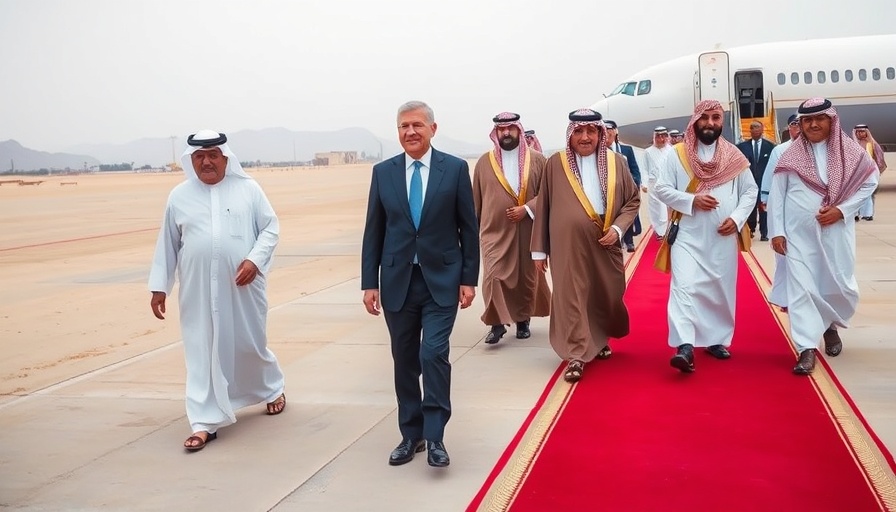
Trump Saudi Arabia investment meeting, dignitaries at airport.

The Ambitious $1 Trillion Goal

Former President Donald Trump is charting a bold course during his visit to Saudi Arabia, proposing a staggering $1 trillion investment from the Arab state into the U.S. economy. This amount is equivalent to Saudi Arabia's entire gross domestic product for last year. As the world watches, the dynamics of international investment and geopolitical relationships take center stage.

Saudi Arabia's Economic Landscape

Behind Trump's ambitious goals lies the challenging economic landscape of Saudi Arabia. Economists suggest that such a large investment is unlikely, especially as the kingdom grapples with its own financial constraints. Reports indicate that Saudi Arabia is facing a budget deficit projected to surpass $70 billion this year, exacerbated by low oil prices that threaten its revenue generation capabilities. The kingdom has pivoted to borrowing instead of lending, complicating prospects for external investments.

A History of Economic Alliances

The relationship between the U.S. and Saudi Arabia is well historically established. Since the mid-1900s, the two nations have navigated complex ties favoring economic partnerships. Trump's proactive approach seeks to deepen these ties amidst vast changes in the geopolitical climate. His previous commitments to foster strong relations with Crown Prince Mohammed bin Salman, whose leadership style leans toward authoritarian principles, reflects both personal bias and strategic interest.

What This Means for the Future

As Trump aims to bolster Saudi investments during his presidency, it raises questions about the implications for the U.S. economy. Could this influx of capital stimulate the American market, or will Saudi Arabia’s tightening budget restrain its ability to invest? Experts warn against overestimating the feasibility of such investments, arguing that the infrastructure needed for a $1 trillion infusion requires time and a stable financial outlook.

Potential Challenges and Opportunities

The proposed investments open the door for significant opportunities in various sectors, including technology and infrastructure. However, challenges remain on the horizon. The unpredictability of oil markets and geopolitical tensions could affect Saudi Arabia's willingness to divert its funds. Furthermore, there is a risk that the proposed investments may not yield immediate or sustainable economic benefits for either nation.

Perceptions and Reactions

Perceptions surrounding Trump's investments are multifaceted. While some economists view this as a strategic move that could enhance job creation and technology development in the U.S., others see it as overreaching. The expectation that the Saudi crown prince will meet Trump's aspirations raises skepticism. When evaluating the ramifications of such a deal, it's crucial for both nations to consider the evolving geopolitical landscape.

Local Insights: What This Means for San Francisco

For residents of San Francisco, the potential ramifications of increased Saudi investment could resonate through local industries. The tech sector, in particular, may see a surge in funding, resulting in new tech startups and innovations dotting the Bay Area. San Francisco’s diverse economy could benefit from the spillover effects of larger financial commitments on the national stage.

Conclusion: The Road Ahead

As the visit unfolds, the ambitious proposition of $1 trillion in Saudi investments looms large over the diplomatic talks. The outcome remains uncertain, but the implications of such deals will undoubtedly shape economic trajectories in both countries. Observers and citizens alike should keep a close watch on these developments, as they could pave the way for a new era of economic cooperation or reveal deeper cracks in international relations.

Events

0 Comments

Write A Comment

*
*
Please complete the captcha to submit your comment.
Related Posts All Posts

Canada Enhances Ebola Screenings at Airports Amid Health Concerns

Update The Emergence of Ebola and Canada’s Response As recent health concerns rise globally, Canada has renewed its commitment to safeguarding public health against the threat of Ebola. In light of the latest developments, especially the reported negative test result from Ontario, the government has decided to enhance airport screening procedures. This proactive step comes as health officials remain vigilant regarding the potential risks associated with international travel. Why Enhanced Airport Screenings Matter Enhanced airport screenings are crucial in controlling how diseases spread across borders. In Canada, the decision aims to reassure the public while also providing an additional layer of safety for travelers. Modern technology and health protocols have become invaluable tools in detecting early signs of potentially dangerous viruses like Ebola, significantly reducing the risk of outbreaks at home. Understanding Ebola: Historical Context Ebola virus disease (EVD) was first identified in 1976 near the Ebola River in what is now the Democratic Republic of Congo. Since then, it has caused several outbreaks primarily in Africa. With symptoms that can escalate quickly, including fever, vomiting, and organ failure, Ebola is deadly and requires immediate medical attention. Historically, outbreaks have raised significant public health concerns both locally and worldwide, underscoring the importance of international cooperation in disease prevention. The Role of International Collaboration Effectively combating infectious diseases like Ebola relies heavily on international collaboration. Countries often share information regarding outbreaks, treatment protocols, and vaccination research. For instance, during the West African Ebola outbreak from 2014 to 2016, nations and organizations rallied together, emphasizing the need for collective action in public health emergencies. Canada, as part of the international community, continues to engage in initiatives aimed at strengthening global health systems and preparedness. Lessons Learned from Previous Outbreaks The outbreak of Ebola has taught crucial lessons about the significance of rapid response and preparedness. Swiftly identifying and isolating cases can significantly mitigate the spread of the virus. Moreover, public awareness campaigns surrounding hygiene and the symptoms of Ebola have proven effective in preventing transmission. As Canada takes steps to implement airport screenings, these lessons remain relevant, guiding how health authorities respond to emerging outbreaks today. Future Predictions: What Lies Ahead? The future holds both challenges and opportunities in the fight against infectious diseases like Ebola. With advancements in medical technology and surveillance systems, health authorities are better equipped than ever to detect and respond to outbreaks. However, factors such as climate change and increased international travel continue to pose significant risks. Experts predict that without continued investment in public health infrastructure and international collaboration, we may see more frequent outbreaks of diseases that could have global implications. The Public’s Role in Health Safety The public plays a pivotal role in health safety by staying informed and adhering to health advisories. Understanding the symptoms of infectious diseases and following guidelines issued by health authorities can empower individuals to act swiftly if they suspect an infection. Moreover, responsible travel behavior, such as receiving vaccinations and practicing good hygiene, will enhance community protection. Conclusion: Staying Informed and Prepared As Canada implements additional screenings for Ebola at airports, it reinforces its commitment to public health. Awareness of these protocols helps reassure the public and encourages collective responsibility in health safety. As travelers and citizens, staying informed and understanding the importance of these measures can empower individuals and communities to act appropriately, ensuring better protection against global health threats.

Hiking Hazard: Australian Man Dies After 400-Metre Fall on Inca Trail

Update A Tragic Loss: The Story of Matthew PatonOn a picturesque hiking expedition along Peru's famed Inca Trail to Machu Picchu, an Australian man, Sergeant Matthew Paton, suffered a tragic fate when he fell 400 meters from a mountain path. At 52, Matthew was not only a dedicated police officer with Victoria Police in Australia but also a loving husband and father. He had embarked on this journey with his wife, seeking the adventure of a lifetime in one of the world’s most breathtaking locations.The Circumstances of the FallAccording to local authorities, the fall occurred when Matthew reportedly tripped and fell through a damaged security barrier while hiking with a group of tourists. The incident happened in a particularly steep and treacherous area near Inti Punku, where hikers often navigate large stone steps. The rugged terrain of the Inca Trail, combined with fatigue and inattention, can make even the most vigilant hiker susceptible to accidents.A Tribute to a Dedicated Public ServantMatthew Paton’s death has resonated deeply within the communities he served. Known for his unwavering commitment to public safety, the sergeant joined Victoria Police in 2009 and was recently recognized for his exceptional training skills at the police academy. Acknowledging his dedication, Victoria Police Chief Commissioner Mike Bush expressed that the department is heartbroken over losing "a wonderful, caring person" who served with distinction. His family remembered him as someone who adored life, family, and adventure.The Cultural Context of the Inca TrailThis incident raises broader questions about the safety and infrastructure on popular tourist trails. The Inca Trail, a UNESCO World Heritage site and a global tourist magnet, attracts over 1.6 million visitors yearly. However, the trail’s steep inclines and uneven paths pose real risks, particularly for those unaccustomed to high-altitude hiking. The tragic fall of Matthew Paton serves as a somber reminder of these hazards.Community Response and SupportIn the wake of this tragedy, local and Australian authorities have mobilized to support Matthew's family. The Australian Department of Foreign Affairs and Trade is providing consular assistance, and the Victoria police department has extended their deepest condolences to his loved ones. The shared grief highlights the strong bonds within the police community and the impact of Matthew's loss on those who knew him personally and professionally.Lessons from a Heartbreaking JourneyMatthew Paton’s beloved family described him as a dedicated husband and father, emphasizing the importance of family throughout his life. He had long wished to explore Peru and had even studied Spanish to enhance his travel experience. This tragic accident prompts reflection on the need for greater awareness regarding hiking safety and the physical demands placed on travelers in perilous regions. As tourists continue to flock to such destinations, they must be equipped with the knowledge of the inherent risks that accompany adventures in unfamiliar terrains.Conclusion: Honoring the MemoryMatthew's legacy will undoubtedly live on through the hearts of those he touched, both as a police officer and as a family man. His adventurous spirit and supportive nature provide a powerful narrative that resonates with us all. This sad event highlights the need to prioritize safety as tourism expands in areas with challenging landscapes. As we remember Sergeant Matthew Paton, we are reminded that every adventure carries risks, and it is crucial to prepare adequately for the journey ahead.

Canadians in Gaza Flotilla: Understanding the Implications of Their Deportation

Update Canadians in the Spotlight: Recent Developments in the Gaza Flotilla Incident The recent capture and subsequent deportation of Canadian activists involved in the Global Sumud Flotilla highlights the delicate balance between humanitarian efforts and international law. Foreign Affairs Minister Anita Anand confirmed that 12 Canadians who attempted to deliver aid to Gaza were intercepted by Israel but are now safe and being transferred to Turkey. The incident has sparked significant controversy, casting a spotlight on Canada’s foreign policy and its relationship with Israel. Unpacking the Immediate Aftermath of the Flotilla's Interception Following the interception of the flotilla by Israeli forces, which consisted of approximately 420 activists aiming to breach a naval blockade, many Canadians, along with others from around the globe, were detained and later deported. Anand emphasized consular support would be available upon their arrival in Istanbul, reinforcing Canada’s commitment to the safety of its citizens abroad. The government's clear stance against the conditions of detention and treatment of the activists signifies a heightened level of diplomatic engagement on this issue. The Role of Humanitarian Activism in International Relations This incident has ignited debates surrounding humanitarian activism. Canadian Prime Minister Mark Carney labeled Israel’s treatment of the activists as 'abominable'. The flotilla, intended to deliver symbolic humanitarian aid, faced accusations from Israel which described the mission as a 'publicity stunt' aiding Hamas rather than genuine humanitarianism. As tensions flare between supporting humanitarian efforts while upholding national alliances, this incident serves as a case study in the complexities of international relations today. Contextualizing Past Flotilla Events: A Continued Trend The Global Sumud Flotilla is not an isolated incident in the realm of maritime humanitarian missions to Gaza. Previous flotillas faced similar fates, with activists often arrested or deported after attempting to breach Israeli naval blocks. Reports of high-profile activists, like Greta Thunberg, being involved underscore a recurring pattern of resistance met with governmental force. The Israeli Navy has frequently cited national security and legality in its actions against such flotillas, establishing a contentious narrative that pits humanitarian goals against state sovereignty. Diverse Perspectives: Community Reactions and Broader Implications The flotilla incident has invoked a spectrum of reactions from communities across Canada and internationally. Supporters of the activists argue that these missions are crucial in protesting against oppression and promoting peace, while opponents maintain that they provoke unnecessary conflict. This duality is essential in understanding public sentiment surrounding the Israeli-Palestinian conflict and how such events contribute to the ongoing discourse. Future Implications for Canadian Foreign Policy As diplomatic relationships evolve, the Canadian government must navigate the complex terrain of international humanitarian efforts and geopolitical alliances. With activism on the rise, the expectation for Canada to support humanitarian initiatives while maintaining constructive relations with Israel could shape future policies. This incident could influence not just how Canada engages with international crises but also how Canadian citizens perceive their government’s role in global humanitarian efforts. Engagement and Moving Forward: What It Means for Canadians For Canadians, the flotilla incident highlights the need for a deeper understanding of both international law and humanitarian rights. This event calls on individuals and government entities alike to consider their roles in upholding justice and human rights abroad. Canadians are encouraged to stay informed and engaged in discussions about their government's international commitments, especially in contexts that blend humanitarianism with geopolitical interests. In summary, the Gaza flotilla incident raises critical questions about how Canada balances humanitarian support with international relations. As discussions continue, Canadians are invited to engage thoughtfully with the political landscapes around them, promoting awareness and responsiveness in our commitments to humanitarianism.

Terms of Service

Privacy Policy

Core Modal Title

Sorry, no results found

You Might Find These Articles Interesting

T
Please Check Your Email
We Will Be Following Up Shortly
*
*
*