Add Row
Add Element
cropper
update

{COMPANY_NAME}

cropper
update
Add Element
update

CALL US

+1 (415) 993-3922

Add Element
update

EMAIL US

robert@sfpressmedia.com

Add Element
update

WORKING HOURS

Mon-Fri: 9am-6pm

Add Element

Add Element
  • About Us
  • Contact Us
  • Advertise
  • Industry Feature
Add Element
  • update
  • update
  • update
  • update
  • update
  • update
  • update
May 15.2025
3 Minutes Read

U.K. Government's New Proposal for 'Return Hubs' Raises Concerns and Questions

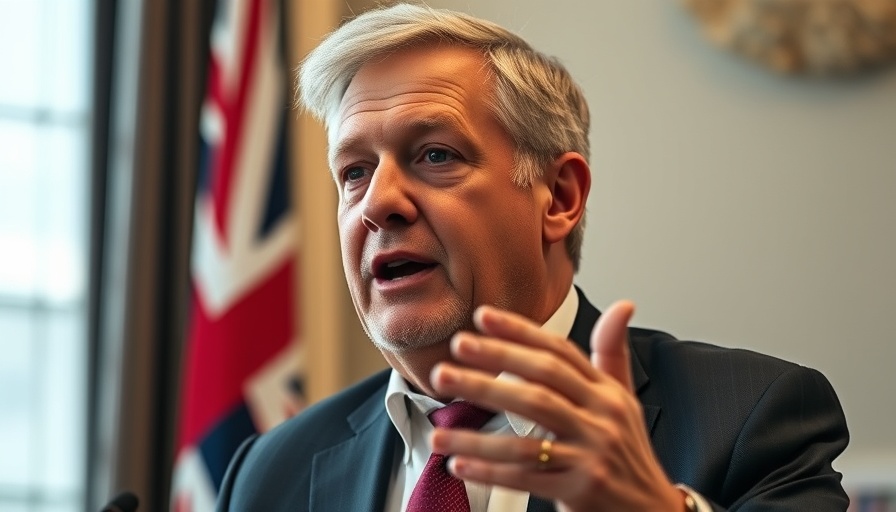
U.K. return hubs for migrants discussion by a speaker with British flag.

The U.K.'s New Strategy: Establishing 'Return Hubs' for Migrants

In a recent announcement, U.K. Prime Minister Keir Starmer confirmed that his government is in discussions with unspecified third countries to set up 'return hubs' for migrants who have been denied asylum and have exhausted their legal options. This policy, which has drawn criticism and comparison to the controversial plan to deport migrants to Rwanda, seeks to address growing concerns about migration in the U.K. The approach comes as Starmer faces pressure to demonstrate control over immigration, a hot-button issue that has sparked intense debate among voters.

Context Matters: Understanding the Migration Debate

The U.K. has grappled with the issue of migration for over a decade, as successive governments sought to strengthen border controls amidst rising public sentiment that migration levels are too high. The new Labour government's approach signals a shift from the previous Conservative administration's Rwanda scheme, which was viewed as impractical and inhumane by many, including Starmer himself. As the conversation surrounding migrants intensifies, the Prime Minister's proposal highlights a broader conversation about humane treatment and the complexities of global migration.

Climbing Pressure: The Role of Public Sentiment

Starmer's initiative reflects the urgent call from many voters for stricter migration controls. Public attitudes have often swayed politically, influenced by factors such as economic conditions, security concerns, and tragic accidents involving migrants. Recent incidents, such as the tragic drowning of five migrants in the English Channel, underscore the perils faced by those attempting to reach the U.K. and add urgency to this political narrative. The pressure on political incumbents to effectively address these sentiments has never been greater.

Exploring 'Return Hubs': What Are They?

The idea of 'return hubs' is not entirely new. It refers to agreements with third countries where the U.K. can send individuals whose asylum applications have been rejected or who have entered the country illegally. Such facilities aim to deter irregular migration by making it clear that attempts to enter the U.K. without permission will not succeed. Critics argue that this can lead to a lack of accountability for the treatment of migrants in these third countries, raising ethical and humanitarian concerns.

Future Predictions: The Evolving Landscape of U.K. Migration Policy

As the U.K. navigates its position in a post-Brexit world, migration policies will likely continue to evolve. Observers predict that Starmer's government will face increasing scrutiny over how these return hubs will operate and the welfare of those sent there. The international community is watching closely, particularly as discussions touch upon human rights and the rights of asylum seekers.

Diverse Perspectives: Navigating the Controversy

This announcement has sparked diverse reactions, from politicians to humanitarian organizations. While some laud the effort as a necessary step to address unlawful migration, others see it as a potentially draconian measure that disregards the rights of vulnerable individuals. Groups advocating for migrant rights warn that such schemes could lead to human rights violations, urging the government to instead invest in fair processes that respect the dignity of those seeking refuge.

Actionable Insights: What This Means for Migrants

For migrants and asylum seekers, the establishment of return hubs may create a sense of urgency to apply for asylum through formal channels. Individuals already in the U.K. should be aware of their rights and legal routes available to them. Community organizations and legal aid resources will be crucial in guiding them through the complexities of these new policies.

Call to Action: Mobilizing Support for Migrants

As discussions surrounding the treatment of migrants continue to unfold, it's imperative for citizens to engage with these issues. Awareness and advocacy can play a vital role in shaping how migrants are treated in the U.K. Now is the time for individuals, organizations, and communities to come together and champion the rights of those seeking asylum.

Events

0 Comments

Write A Comment

*
*
Related Posts All Posts

Trump Tariff Ruling is Not the End: What It Means for International Trade

Update Understanding the Supreme Court's Ruling on Tariffs The recent decision by the U.S. Supreme Court to strike down former President Donald Trump's emergency tariffs is significant yet fraught with implications. The court determined that Trump exceeded his authority under the International Emergency Economic Powers Act (IEEPA), a ruling that halts tariffs imposed as a response to declared emergencies. However, this ruling primarily concerns tariffs on imports intended to address fentanyl trafficking and a perceived trade deficit, leaving many other tariffs intact and the future of U.S. trade policy ambiguous. The Continued Path of Tariffs: What Remains While the Supreme Court's decision affects specific tariffs, Trump’s tariffs on steel, aluminum, and autos, enacted under Section 232 of the Trade Expansion Act, continue to be in place. Section 232 allows tariffs when imports threaten national security, granting the executive branch broad discretion. This legislation remains a cornerstone of America's trade strategy and could still enable Trump to manipulate tariff levels significantly going forward. The Trade War: An Ongoing Saga This latest ruling should not be viewed as an end to Trump's trade wars; rather, it sets the stage for a new chapter fraught with uncertainty. Critics have pointed out that the decision allows Trump to pivot to other legal frameworks, such as implementing a new 10% global tariff. This could invigorate existing tensions in international trade and reignite discussions around protections for domestic industries. How It Affects International Trade Dynamics The ripple effects of these tariffs extend beyond U.S. borders, affecting global supply chains and international prices. Canada's President, Mark Carney, expressed concern, recognizing that around 85% of Canadian exports to the U.S. could be exempt from tariffs under the Canada-U.S.-Mexico Agreement (CUSMA), yet uncertainty looms for industries reliant on U.S. markets. As investors react to this unfolding scenario, volatility in stock markets remains a pertinent issue. Legal Ramifications and Future Developments Post-ruling, the legality of additional tariffs is being scrutinized by experts and legal analysts. The Supreme Court’s challenge to Trump's interpretation of IEEPA suggests that future actions could face substantial resistance in courts. Lawyers anticipate that any new tariffs will likely lead to further legal battles, as their implications cross over into sectors previously impervious to tariff impacts. What Lies Ahead in U.S. Trade Policy As Trump reshapes his trade agenda in light of the Supreme Court ruling, the path forward remains complex and political. With midterm elections approaching, Congress may play a critical role in determining the future of tariff policies. Trump's administration must navigate a landscape where public sentiment towards tariffs is increasingly skeptical, placing public support in the balance as potential economic repercussions loom. Practical Insights for Businesses and Consumers For businesses, knowing the current state of trade policies is critical for strategic planning. Companies may need to assess their reliance on certain imports and consider diversifying supply sources to mitigate the risk of tariffs impacting their costs. Consumers, on the other hand, should remain vigilant about potential price increases on goods affected by tariffs, as these costs will eventually be passed down the supply chain. Final Thoughts: Navigating Trade Uncertainty In this ongoing saga of trade wars, it's essential for both policymakers and businesses to stay alert. With the Supreme Court ruling stepping away from broad emergency powers, attention will shift to how Trump will utilize available legal frameworks to maintain his trade agenda. The balancing act between national interests and global economic relationships will play a pivotal role in shaping U.S. trade policy moving forward. Engaging in continuous dialogue may be the key to easing the tensions that tariffs have exacerbated.

Punch the Baby Monkey's Heartwarming Journey: Abandonment and Recovery

Update Heartwarming Story of Punch the Baby MonkeyIn a touching tale emerging from Japan's Ichikawa City Zoo, Punch, a seven-month-old Japanese macaque, has captivated social media and hearts worldwide following his abandonment by his mother shortly after birth. His journey of adaptation and survival at the zoo paints a poignant picture of resilience and the search for connection. Given a plush orangutan toy by caretakers to soothe his loneliness, Punch has become known for dragging this lifelike companion around, a testament to the unique bond he forms with it.The Viral Video and Public ReactionRecently, a video of Punch being dragged across the ground by a larger macaque stirred emotional responses as it illustrated the challenges he faces in socializing with other members of his species. TikTok user @tate_punch captured this moment, which led to public concern and debate regarding the social dynamics in monkey troops. Punch's yearning for companionship, shown when he rushes back to his plush toy after the interaction, is relatable and makes people reflect on the stresses faced by orphaned and abandoned animals. The video quickly went viral, igniting discussions about wildlife welfare and the emotional lives of animals.A Struggle for Social AcceptanceThe zoo shared insights into Punch's behavior, noting that he has learned how to socialize with other monkeys over time. Though he has been scolded and occasionally rejected, each encounter contributes to his learning and integration. The adult monkey that scolded Punch is believed to be protective of her own offspring, adding complexity to Punch's social interactions. The emotional landscape for Punch is filled with both moments of joy with his plush companion and obstacles in forming friendships within the monkey troop.How Zoos Like Ichikawa City Are Supporting AnimalsZoo officials have emphasized their commitment to nurturing Punch's development. Providing him with enriching experiences, they are working to foster his social skills, making him better suited for integration into the troop. This approach is essential; animal caretakers recognize that acceptance and social bonds in primate communities take time. The recent birth of Punch's sibling, Chimi, presents a glimmer of hope that familial ties can foster connection for him in the future.The Role of Social Media in Animal WelfareThe phenomenon of Punch’s viral fame has attracted crowds to the Ichikawa City Zoo, demonstrating how social media can influence public interest in animal welfare. With visitors eager to witness his story, the zoo staff has been astonished by the unexpected turnouts, indicating that compassion for wildlife resonates widely. This trend underscores the importance of transparency and storytelling in zoo habitats, fostering connections between viewers and animals while highlighting conservation and humane treatment.What We Can Learn from Punch’s StoryPunch’s tale encourages all of us to contemplate deeper issues surrounding wildlife and their emotional needs. It prompts a reflection on how connections are vital for both animals and people, and how nurturing environments can significantly aid in recovery and growth. Punch's journey from loneliness to potential acceptance in monkey society invites conversations about the importance of empathy, understanding, and mutual support in our interactions—whether among humans or across species.Call to Action: Support Animal Welfare EffortsAs Punch’s story continues to resonate, it brings attention to the broader plight of abandoned wildlife. Supporting your local zoos and wildlife sanctuaries, advocating for animal welfare, and promoting conservation efforts can make a transformative difference both for individual animals like Punch and for environments where they thrive. Consider visiting your local zoo or supporting wildlife charities dedicated to rescuing and rehabilitating animals in need.

Will FCI Dublin Become an ICE Detention Facility? Community Fears Persist

Update A Troubling Legacy: FCI Dublin's Dark Past The Federal Correctional Institution in Dublin, California, has been notorious for its grim history, having gained the title of the "rape club" following numerous allegations of sexual abuse among inmates. Over the years, reports revealed that many female inmates, particularly those with immigration status, were particularly vulnerable to exploitation by prison staff. The prison's closure in April 2024 marked the end of a chapter steeped in scandal; however, recent activities around its potential transformation into an ICE detention facility have reignited fears and concerns among the community and advocates. Current Administration's Stance: A Fog of Ambiguity The Trump administration has claimed that FCI Dublin will not be repurposed as an ICE facility, a statement that many find hard to accept given the administration's aggressive stance on immigration and deportation. The Department of Homeland Security (DHS)'s assurances are further complicated by their commitment to expanding ICE’s detention capacity amid claims of keeping violent offenders off the streets. Critics remain suspicious, suggesting that the truth may lie in a gray area where private companies could take over the facility, effectively circumventing government ownership and accountability. Community Resistance: Voices Against Reopening Elected officials and local community members are adamant against reopening FCI Dublin for immigration purposes. Representative Eric Swalwell and other California leaders have vocalized their opposition, citing the facility's dangerous history and unsafe conditions. The Dublin City Council and more than 8,300 residents have registered their concerns, urging lawmakers to halt any potential plans that would revive the facility. Historical Context and Implications for Immigration Policy The implications of reopening FCI Dublin extend beyond local safety; they pose serious questions about the treatment of immigrants in the U.S. It raises the issue of how vulnerable populations may be further victimized within systems that have previously failed them. The history of FCI Dublin serves as a reminder of the systemic challenges that immigrants face in the justice system, particularly those who are undocumented. Advocates fear that reopening this facility could lead to a re-traumatization of individuals who have already suffered under the prison's former regime. A Call for Vigilance and Accountability The ongoing situation surrounding FCI Dublin is not merely a local issue; it strikes at the heart of larger national conversations about immigration policy, justice, and accountability. As the administration signals its intentions, it is vital for residents, advocates, and lawmakers to remain vigilant and to continue demanding transparency regarding the future of this facility. Engaging in community discussions and advocating for the rights of the most vulnerable is essential to preventing a repeat of past traumas.

Terms of Service

Privacy Policy

Core Modal Title

Sorry, no results found

You Might Find These Articles Interesting

T
Please Check Your Email
We Will Be Following Up Shortly
*
*
*