Add Row
Add Element
cropper
update

{COMPANY_NAME}

cropper
update
Add Element
update

CALL US

+1 (415) 993-3922

Add Element
update

EMAIL US

robert@sfpressmedia.com

Add Element
update

WORKING HOURS

Mon-Fri: 9am-6pm

Add Element

Add Element
  • About Us
  • Contact Us
  • Advertise
  • Industry Feature
Add Element
  • update
  • update
  • update
  • update
  • update
  • update
  • update
July 10.2025
3 Minutes Read

U.S. Sanctions Francesca Albanese: Impacts on Human Rights Discourse

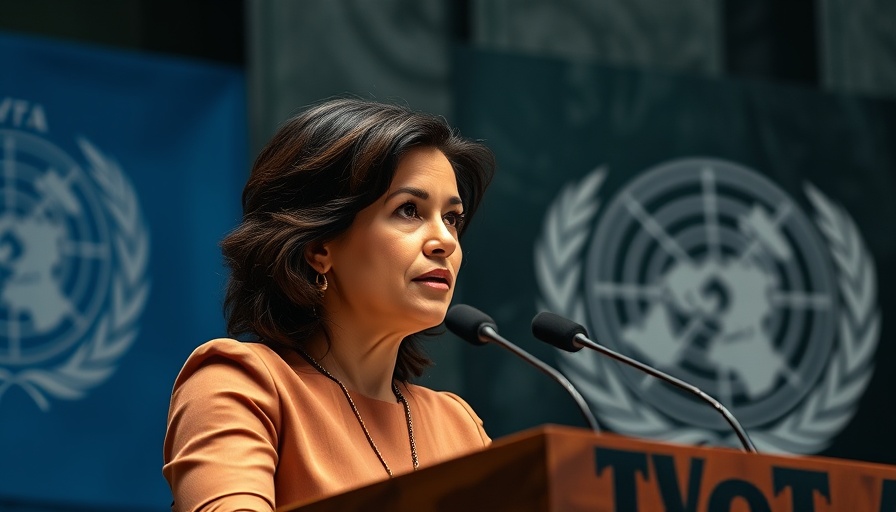
Confident woman at UN podium addressing audience, U.S. sanctions Francesca Albanese.

U.S. Sanctions Target a Key Critic of Israel's Actions

In an unprecedented move, the United States has imposed sanctions on Francesca Albanese, the U.N. special rapporteur for the occupied Palestinian territories, highlighting a significant escalation in the geopolitical conflict centered around Israel and Palestine. Secretary of State Marco Rubio announced that these sanctions stem from Albanese's outspoken criticism of Israel's military campaign in Gaza, particularly her collaboration with the International Criminal Court (ICC) in investigations concerning potential war crimes.

Understanding the Impact of U.S. Sanctions on Human Rights Advocacy

Albanese's work as a legal scholar and human rights advocate has drawn attention both for its content and the reactions it provokes. By labeling her investigations as a threat, the U.S. government signals to other international human rights experts that similar actions could lead to sanctions as well. This tactic aims to silence dissenting voices regarding Israel's controversial military actions, raising concerns among human rights organizations globally about the implications for freedom of speech and advocacy.

The Broader Context of U.S.-Israel Relations

The sanctions introduced against Albanese come in the wake of longstanding U.S. support for Israel and actions taken by the previous Trump administration to protect Israeli officials from prosecution. In recent weeks, the U.S. has also targeted officials at the ICC for issuing arrest warrants tied to Israeli leadership, further complicating the international legal landscape surrounding the conflict. Observers have noted that this continuation of pressure against the ICC and critics like Albanese serves not only to deter international scrutiny but also to reinforce a narrative that prioritizes geopolitical alliances over humanitarian concerns.

Francesca Albanese's Bold Statements and Their Ramifications

During her recent address at the U.N. Human Rights Council, Albanese declared Israel's actions to be “responsible for one of the cruelest genocides in modern history.” Such statements have crystalized her role as a controversial yet pivotal figure in the discourse surrounding the Israeli-Palestinian conflict. The choice of language employed by Albanese reflects a growing frustration among some humanitarian observers who feel that the international community has inadequately addressed the suffering in Gaza.

What Does This Mean for Future Investigations?

This development raises pressing questions about the future of international justice regarding war crimes and human rights violations. With the ICC now facing direct hostility from the U.S. government, the potential for accountability for actions taken during the recent conflicts may diminish. Albanese’s situation could deter other legal experts from engaging with the ICC, fearing similar repercussions, effectively chilling the pursuit of justice for victims of armed conflict.

The Echo of Albanese's Work in Global Human Rights Activism

Albanese’s experience also sheds light on a much larger issue—how human rights advocates operate under pressure. Activists worldwide are observing the United States’ attempt to intimidate a U.N. expert, viewing it as a warning against any critical examination of powerful nations’ actions. This tactic poses a risk not only for Albanese but also for other potential whistleblowers or advocates who risk their careers to uphold human rights principles.

Reactions from the International Community

Human rights organizations have expressed alarm over the sanctions, urging the U.S. to reconsider its stance. Many argue that imposing sanctions to silence critics serves to undermine the very ideals that democratic nations are supposed to represent: truth, justice, and accountability. The international community must grapple with the consequences of penalizing voices that contribute to essential dialogues on humanitarian issues.

As more information unfolds, it will be crucial to monitor responses from various stakeholders regarding U.S.-Israeli relations, the role of the ICC, and the fate of human rights advocates like Francesca Albanese.

News

0 Comments

Write A Comment

*
*
Related Posts All Posts

Latest Boat Strike in Pacific Ocean: A Call for Improved Maritime Safety

Update Understanding the Incident: The Latest Boat Strike in the Pacific In a tragic series of events, a recent boat strike in the Pacific Ocean has claimed the lives of three individuals. Safety concerns have once again come to the forefront, igniting discussions about maritime regulations and the imperative need for proper navigational protocols. As we uncover the details of this incident, it’s essential to grasp the broader implications it has for maritime safety and international response. Why This Event Matters: The Broader Context Boat strikes are not merely isolated incidents; they represent critical lapses in both safety protocols and environmental stewardship. The most recent strike not only resulted in loss of life but also raises questions about how prepared our maritime systems are for preventing such tragedies. With rising global maritime traffic, these incidents serve as stark reminders of the potential dangers lurking in busy sea routes. Historical Context and Evaluation of Maritime Safety Since the late 20th century, boat strikes involving larger vessels and recreational boats have increased. Regulations implemented post-9/11 aimed to enhance security, but the complexity of ensuring safe navigation on increasingly crowded waterways remains a challenge. Analyzing past incidents can provide insights into effective measures that could mitigate future risks. For instance, increased training for crew members and more stringent enforcement of navigational rules could reduce these tragic occurrences. Future Predictions: Shifts in Maritime Safety Regulations As awareness of maritime safety heightens following such incidents, we can anticipate possible shifts in regulations. Governments might introduce stricter maritime laws, including mandatory use of technology that aids in collision avoidance and enhanced safety training for vessels operating in high-traffic areas. Additionally, international marine organizations may push for standardizing safety measures across borders, promoting a unified approach toward reducing accidents. Human Impact: The Emotional Aftermath The loss of life in maritime incidents extends beyond those immediately affected; it reverberates throughout communities. Families and friends left behind grapple with immense grief, while the ongoing challenges of grief management surface. Victims’ families often seek answers, accountability, and assurances from authorities that such events will not recur. Addressing these emotional and psychological ramifications is essential for all stakeholders involved. Taking Action: What You Can Do As we reflect on the latest boat strike and similar tragedies, your role as a responsible citizen comes into play. Whether you are a maritime enthusiast, a boater, or simply someone who enjoys recreational ocean activities, education is key. Familiarizing yourself with maritime safety practices and assuming responsibility for safe boating can foster a culture of safety that extends beyond individual interests. Further, advocating for stricter regulations and promoting awareness in your community can lead to positive change. Collective voices calling for improvements in marine safety standards can significantly influence policymakers and maritime authorities. Join community groups, engage in discussions, and voice your support for reform that prioritizes safety on our oceans. By doing so, you contribute to a future where such tragedies are minimized.

MAGA Inc.'s $1 Million Donation: Implications for U.S. Politics

Update Understanding MAGA Inc.'s Financial Power In a surprising twist within U.S. political finance, Donald Trump's super PAC, MAGA Inc., has emerged as one of the most significant players in shaping political narratives ahead of the 2026 midterms. Recently, it was revealed that a bridge owner made a staggering $1 million donation to the PAC. This event raises questions about the sources of funding that profoundly impact political campaigns and the players behind the scenes. The $1 Million Donation: A Turning Point? The $1 million donation from the bridge owner, a move made just before Trump publicly condemned a political competitor, highlights how financial support can not only amplify a candidate's message but also dictate the terms of political discourse. Donations like these can shift focus and influence public perception, enabled by high-profile endorsements and financial backing. Financial Clout: MAGA Inc.'s Growing Influence MAGA Inc. recently reported holding over $294 million, a testament to its potent fundraising machine. Just in the last six months, the PAC raised more than $102 million, driven by significant contributions from individuals such as tech billionaires and private equity moguls. Reports indicate that over 25 individual donations exceeded $1 million, an indicator of robust support. This aligns with the PAC's ongoing strategy to strengthen Republican candidates and challenge Democrat positions. The Broader Political Landscape As the midterm elections approach, the implications of MAGA Inc.'s financial strategies become increasingly crucial. The PAC's approach underscores a broader trend where significant donations are often used to bolster candidates and positions directly opposing the Democratic Party and others assumed to threaten Trump's agenda. The scale of financial resources at their disposal illustrates a growing divide within U.S. politics, whereby money continues to shape electoral outcomes and policy discussions. The Ripple Effect: How Donations Shape Policymaking The narrative generated around high-stakes donations, such as that from the bridge owner to MAGA Inc., reflects larger issues regarding political accountability and influence. The common perception is that large donations create a sense of obligation and often result in tailored policies that align with donor interests. This phenomenon raises ethical questions about the intersection of money and politics, highlighting the need for transparency and accountability in political financing. Counterarguments: The Necessity of Funding Proponents of such funding argue that in a competitive political arena, large donations are essential for candidates to survive against their opponents. Many state that these contributions are a form of free speech under the First Amendment, asserting that spending money on political campaigns is merely an extension of one's right to express political views. This perspective posits that large financial backing merely levels the playing field in an increasingly expensive political landscape. Understanding the Future: Trends and Predictions As we look toward the future, it’s anticipated that the impact of super PACs like MAGA Inc. will only grow stronger. The significant influx of cash can sway not just elections, but also influence legislation long after votes are cast. Tracking these trends gives insight into the evolving dynamics of political finance, indicating that as fundraising efforts ramp up, concerns about legislative integrity may rise in tandem. For parents and casual observers alike, the role of money in politics warrants closer scrutiny. The implications of these financial dynamics touch on issues of governance, policy, and collective accountability, affecting everyday life. Understanding these nuances offers a clearer lens on the governance issues at play. You can find more compelling insights into how politics and money intersect in our present landscape. Stay informed.

Abigail Spanberger's Opportunity to Reshape Democratic Response to Trump

Update Who is Abigail Spanberger? A Rising Star in Politics Abigail Spanberger, a U.S. Congresswoman from Virginia, is making waves as she prepares to deliver the Democratic response to President Trump's upcoming State of the Union address. Elected in 2018, Spanberger has quickly established herself as a prominent figure in the Democratic Party, focusing on issues such as healthcare, education, and national security. Her unique background as a former CIA officer gives her insights that resonate with constituents who prioritize security and transparency in governance. The Importance of the State of the Union Response The response to the State of the Union is a significant opportunity for the opposing party to present its vision and counter the president's agenda. Spanberger's upcoming address will be particularly pivotal, given the rising concerns among Americans over divisive politics and governance issues. By speaking directly to the American people, she aims to reconnect with voters who feel disconnected from traditional political narratives and highlight pressing issues that affect daily lives. Addressing Key Issues: Healthcare, Climate Change, and Education Spanberger's focus in her response will likely cover a trio of critical areas: healthcare, climate change, and education. With the ongoing debate around healthcare costs and access, she is expected to advocate for solutions that prioritize affordability and quality. Similarly, climate change remains a top concern for many voters. Spanberger's plans could include supporting sustainable policies that encourage green jobs while addressing environmental challenges. Education reform is also a hot topic, especially in light of the pandemic's impact; she may propose strategies to ensure that all children receive a quality education. Emphasizing Unity and Collaboration Given the current polarized political climate, Spanberger's message will likely stress the importance of unity and bipartisanship. This includes working alongside Republicans on shared goals such as improving economic opportunities and supporting veterans. By fostering dialogues focused not on party lines but on common human experiences, Spanberger hopes to inspire a collaborative spirit that resonates with a diverse audience. Predictions for the Response Speculations suggest that Spanberger’s address will be a mixture of heartfelt personal stories and solid policy proposals. With a background rich in discipline and intelligence, her delivery is expected to be both empowering and engaging. Observers note that gauging public reactions will be critical not just for the immediate impact of her speech but for the Democratic Party's direction heading into the next election cycle. The Bottom Line: A Chance to Reconnect This opportunity represents more than just a political address; it showcases Spanberger’s potential to redefine the Democratic narrative and forge connections with voters. Her calm yet assertive demeanor is expected to stand out against the backdrop of Trump's address and could mark a turning point for both Spanberger and her party as they look to reclaim trust among Americans.

Terms of Service

Privacy Policy

Core Modal Title

Sorry, no results found

You Might Find These Articles Interesting

T
Please Check Your Email
We Will Be Following Up Shortly
*
*
*